



Nita Ambani’s emerald necklace: what a photograph can and cannot tell you
The weights and the valuations given for this necklace disagree with each other. That is a useful place to start, because it shows what can and cannot be established from an image.

When an emerald and diamond necklace appeared at the pre-wedding celebrations for Anant Ambani and Radhika Merchant in Jamnagar in March 2024, the photographs travelled further than any description of the stones. Within days the piece had a weight, a price and a history, none of which agreed from one report to the next.
The figures are worth looking at before the stones are. One widely repeated report put the emeralds at about 863 ct in total and the necklace at about USD 7.5 million. Others gave about INR 500 crore, roughly USD 60 million, for the same piece. Vogue Singapore, which described the necklace in detail, declined to put a number on it at all, noting that estimates had been “bandied about but not confirmed”. No jeweller and no laboratory has published a report on the finished piece.
That gap is the subject of this article. Photographs of gemstones circulate faster than the information needed to interpret them, and a good deal of what gets asserted from an image cannot be established that way at all. Here is where the line falls.
What a photograph can show
An image, if it is sharp and the piece is shown flat, supports some observations. Proportions can be measured against a known reference in the frame, which gives an approximate size. Cut style is usually clear: the two centre stones in this necklace are step cut, with the long facets and cropped corners that emerald cutters have used for centuries because the outline protects the corners of a brittle stone. Setting style, the arrangement of the stones and the general quality of the mounting can all be described. In a very clear photograph, fissures that reach the surface are sometimes visible.
Colour is where confidence starts to slip. Green varies with the light source, the white balance of the camera and the editing of the image. A stone photographed twice on the same day can look like two different stones.
What a photograph cannot show
Three things in particular, and they are the three most often asserted from images.
Weight. Carat weight is measured on a balance. A dimension read from a photograph can be converted into an estimate, but the calculation assumes a depth the image does not show, so the result is an estimate and should be described as one.
Treatment. Most emeralds on the market have had a filler placed in their surface-reaching fissures, usually an oil or a resin, which makes those fissures less visible. The material sits inside the stone and is invisible in a photograph. In the laboratory it is found under magnification and identified by infrared spectroscopy, and the amount present is reported on a scale running from none to significant. That grading affects value, by how much depending on the stone and the market, and no image can supply it.
Origin. This is the one most often claimed from a picture, and the one that needs the stone in hand most clearly.
The Colombian question
Colombia has been a source of fine emerald for centuries, and the trade has long associated a particular inclusion with Colombian material: the three-phase inclusion, a cavity holding a solid crystal, a liquid and a gas bubble, all trapped as the crystal grew.
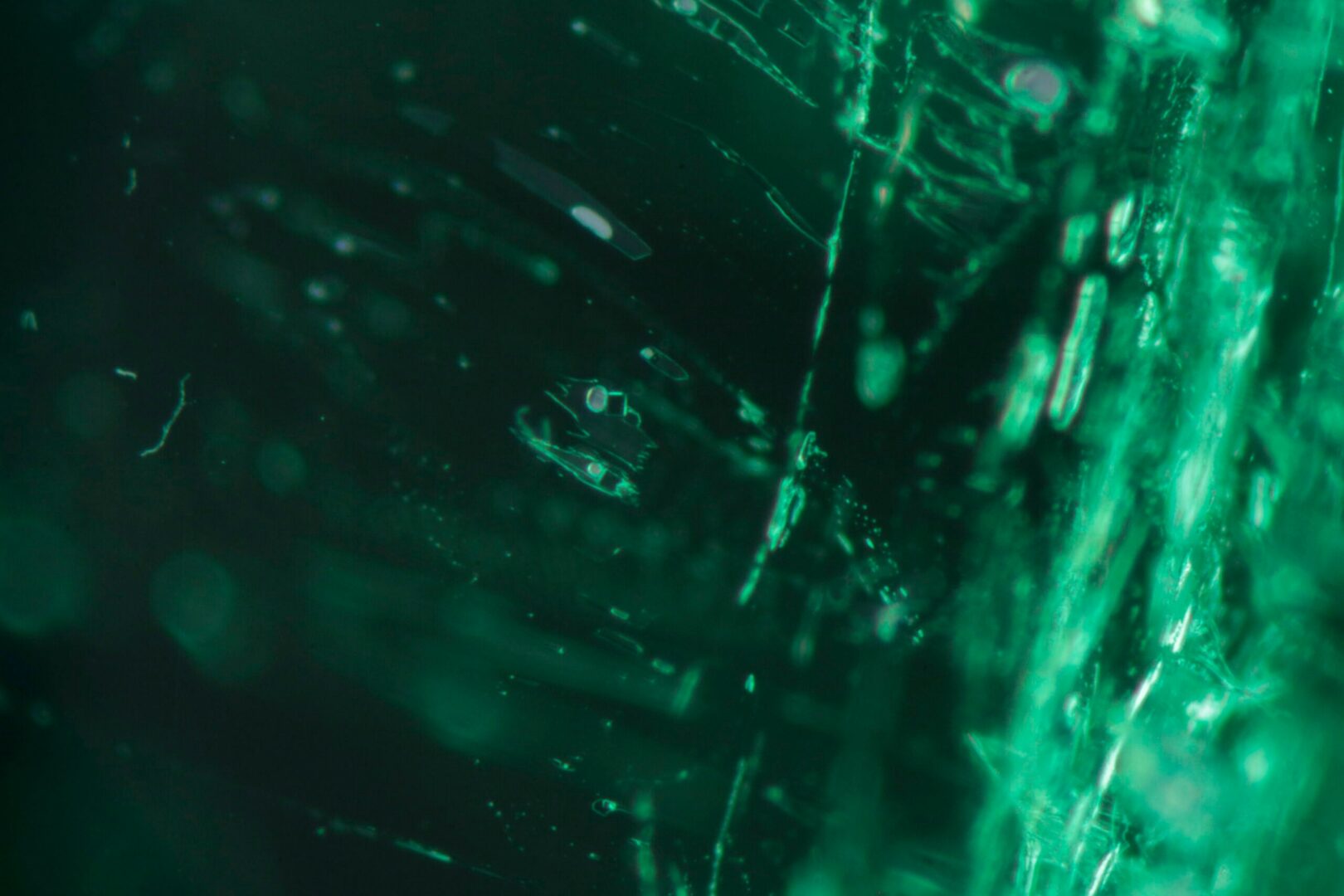
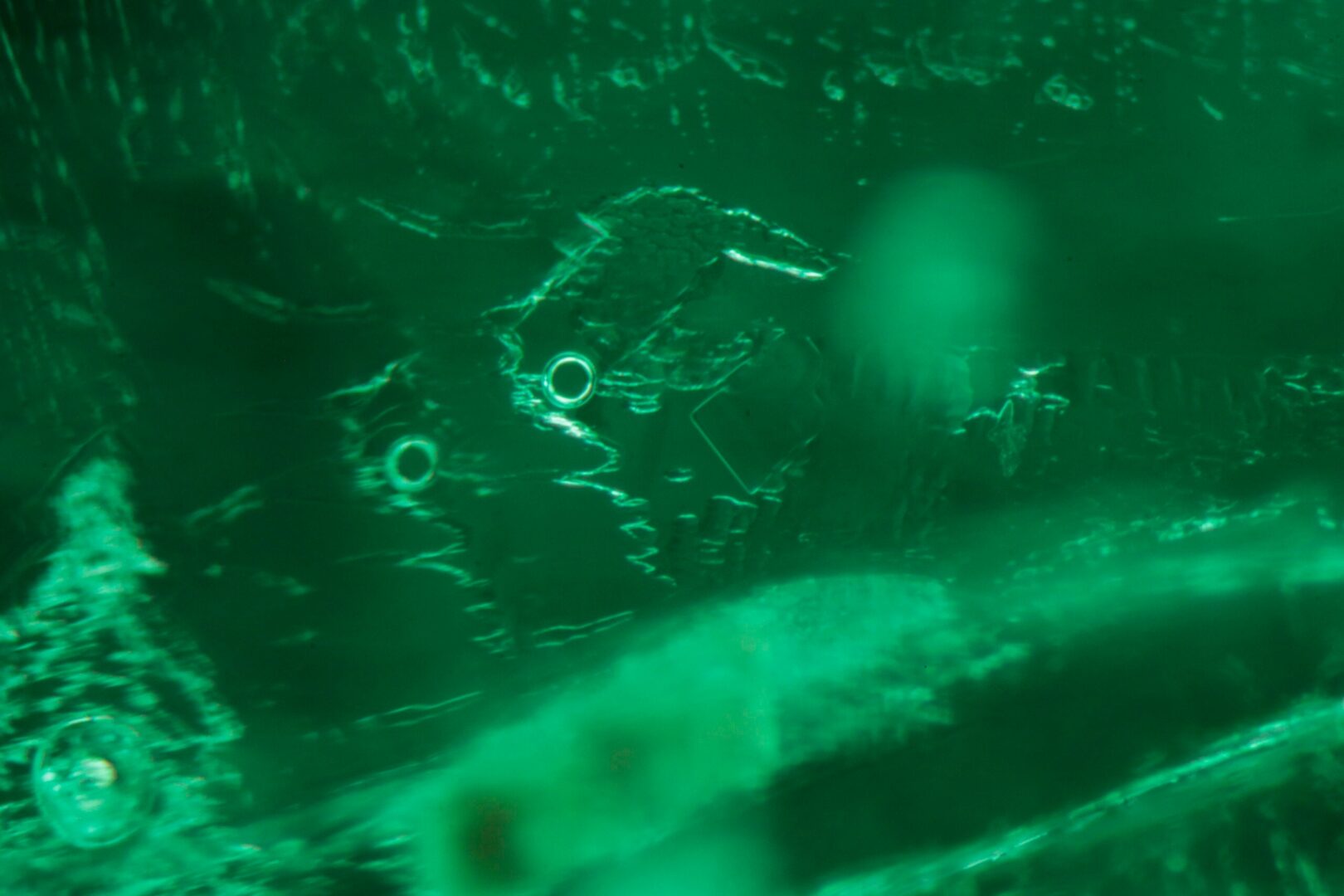
The association is real but it is no longer sufficient on its own. Work published by GIA in 2014 found three-phase inclusions in emeralds from Afghanistan, from Davdar in China, and from Kafubu and Musakashi in Zambia, as well as from the Colombian deposits. What distinguishes the Colombian inclusions is their form rather than their presence: jagged outlines, a relatively small gas bubble and clusters of irregular daughter crystals, against the needle-like cavities of Panjshir material or the more rounded outlines seen in stones from Davdar. That is a judgement about shape, made at magnification, and it is not one a photograph of a finished necklace can support.
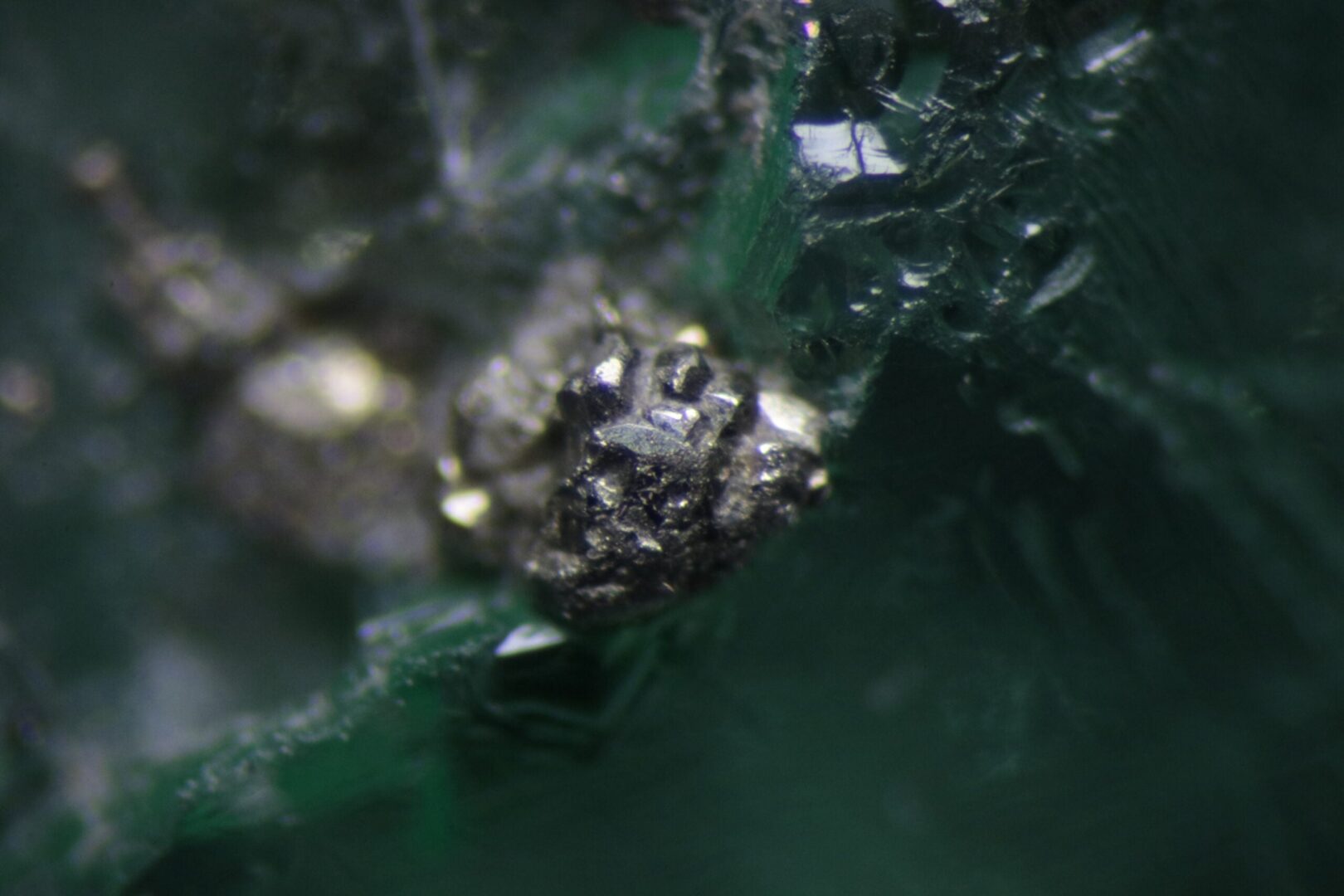
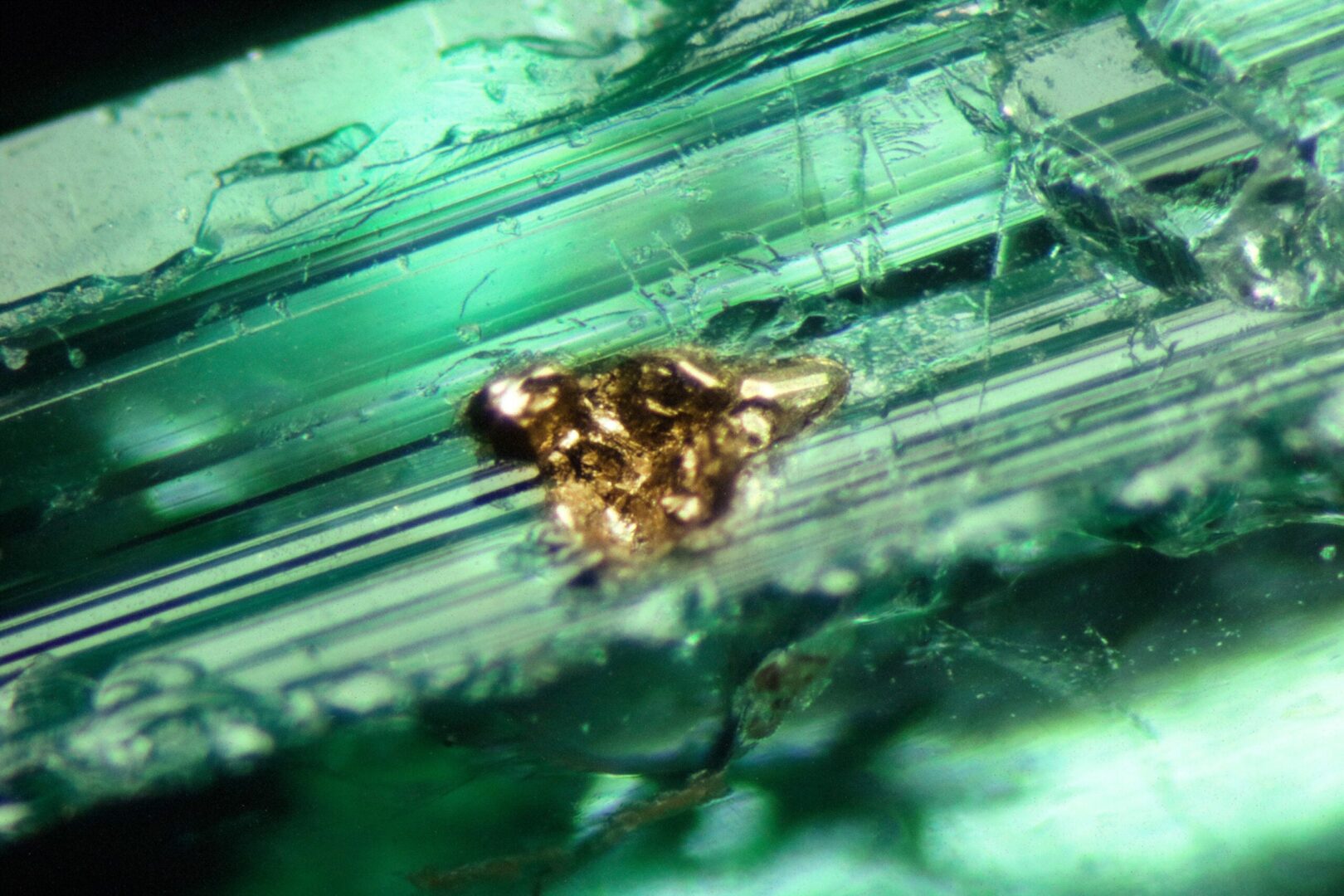
Colombian emeralds commonly show two other features our own reference stones record: pyrite crystals, isolated or in clusters, with a brassy metallic appearance, and colourless to greyish irregular carbonate crystals, often gathered in flakes. Again, these are indications rather than proof.
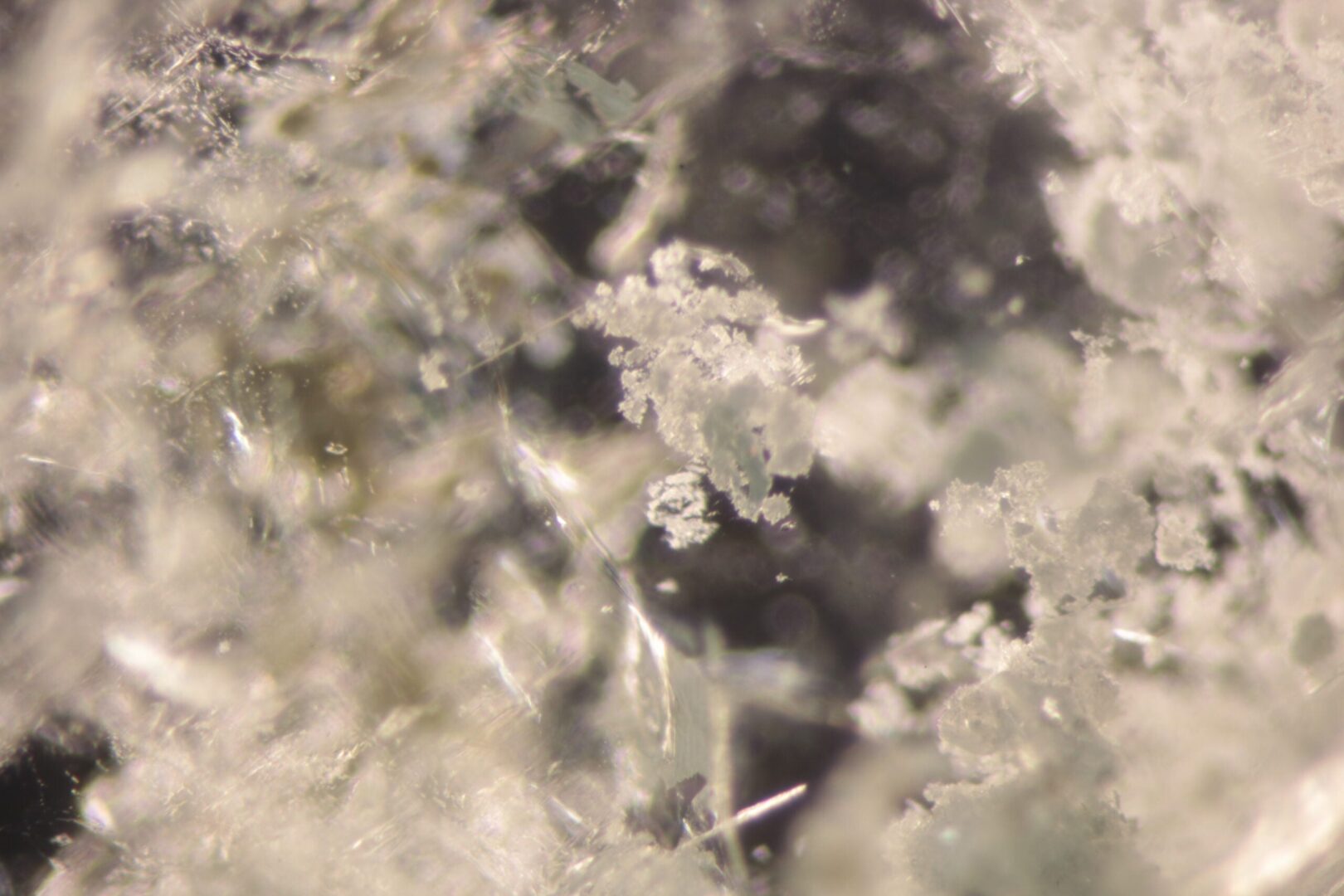
Origin on a modern report rests on three lines of evidence read together: the inclusion scene under the microscope, the ultraviolet to near infrared absorption spectrum, and trace element chemistry measured by laser ablation inductively coupled plasma mass spectrometry (LA-ICP-MS). Each of the three narrows the field. None of them settles it alone, which is why a report states origin as a conclusion consistent with the evidence rather than as a fact about a mine.
Why very large emeralds are scarce
Emerald grows in veins, and the crystals carry fissures and cavities from the start. The mineral is also less tough than sapphire or ruby, because of those fissures, so material that survives extraction and cutting at a large size is uncommon. Most large rough breaks down into far smaller finished stones, which is why the market in emeralds above 100 ct is small and why single stones of several hundred carats attract this kind of attention.
Why the figures disagree
Given all of that, the spread in the reported numbers is not surprising, and some of it is legitimate.
Weights change for ordinary reasons. A stone that is repolished loses a little. A chip at an existing fracture, which is a real risk in emerald, can take a fraction of a carat off a recorded weight, so the same stone can appear in two documents at two weights, both correct on their own date. Two laboratories measuring the same stone will also describe its treatment in their own terms.
Prices are more slippery still. An auction result is the price of one lot on one day, and loose stones sold at auction are not the same commodity as a finished necklace containing them. Repeating an auction figure as the value of a piece of jewellery, or a jewellery valuation as the price of the stones, produces exactly the kind of gap seen here. A claim has also circulated that the two centre emeralds were sold at auction in New York in December 2020; it appears to originate with a motoring and lifestyle blog and two social media posts, and none of those sources shows the lot record. Until that record is produced, it is a claim about the stones, not a fact about them.
Three questions worth asking of any gem story
Who measured it, and is the figure a measurement or an estimate. What does the report actually say, including its wording on treatment and on origin. And does the figure being quoted belong to the stones or to the finished piece.
Those three questions separate most of what can be known about a gemstone from what has simply been repeated. For anyone who wants the answers for a stone of their own rather than for a photograph, that is what a laboratory report is for: our origin determination service sets out what we test and how the conclusion is worded.
Frequently asked questions
Can you tell where an emerald is from by looking at photographs?
No. A photograph can show cut, proportions and general appearance. Origin is determined from the inclusions seen under a microscope, the absorption spectrum and trace element chemistry, all of which need the stone in the laboratory.
Are three-phase inclusions proof that an emerald is Colombian?
No. They are found in emeralds from Afghanistan, China and Zambia as well as Colombia. The form of the inclusion, together with spectroscopy and chemistry, is what supports a conclusion about origin.
Does a treated emerald still count as natural?
No. “Natural” means untreated. A clarity-enhanced emerald formed in the ground rather than in a laboratory, so it is not synthetic, but the filler in its fissures is a treatment, and a report that records that treatment does not describe the stone as natural. Clarity enhancement is common in emerald, which is why the report states whether filler is present and how much.
 News · Press release
Amira Hatta receives a NextGen Coloured Gem Excellence Award
Amira Hatta, Managing Director of ICA | GemLab, is one of 18 recipients of the NextGen Coloured Gem Excellence Awards 2026, run by the Jewellery World Awards.
 News · Announcement
How AI supports our testing workflow
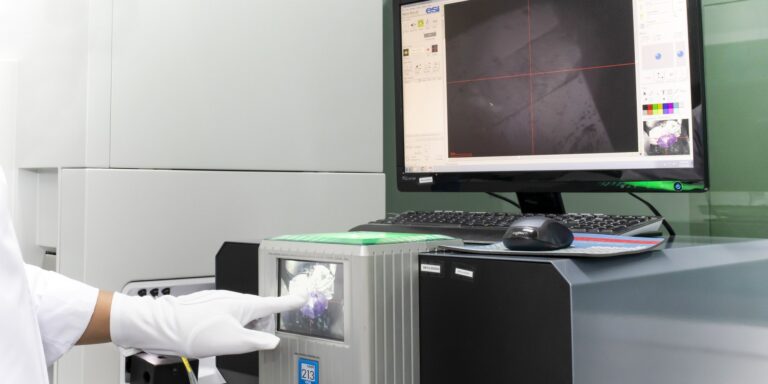
Each stone now passes hundreds of AI-supported checks before a gemologist issues the finding. What that changes, and what it does not.
 News · In the news
JNA reports on AI-supported testing at ICA | GemLab
JNA spoke to Amira Hatta about AI-supported checks in our testing workflow, reference data covering 50+ deposits, chemical data in our reports, and new research.
Commission a report.
From identification to bespoke monographs, the laboratory provides documentation matched to the significance of the stone.
Turnaround
Standard turnaround is 5–7 working days for 2-Fold Reports. Premium Reports and Monographs are scoped individually.
Trade submissions
Parcels, recurring lots, and high-volume submissions are quoted individually. Contact the laboratory to discuss logistics.