

Our reports now include chemical data
Reports now show the chemical analysis behind the findings, so you can see the data as well as the conclusion drawn from it.

Our reports now include chemical analysis alongside the findings. You see the measured data as well as the conclusion the laboratory drew from it.
Why we show the data
A finding is only as useful as the method behind it. Publishing the chemistry lets a buyer, a second laboratory or an auction specialist see what the conclusion rests on and judge it for themselves.
What the chemical data tells you
Gemstones take up small amounts of other elements as they grow. These trace elements are measured in parts per million, and their concentrations and ratios vary with the geological setting in which a stone formed. In corundum (ruby and sapphire), elements such as iron, gallium, vanadium, chromium and titanium are among those commonly compared with reference material from known deposits.
The same measurements support treatment detection. Beryllium diffusion in sapphire, for example, cannot be identified through spectroscopy alone. It requires chemical analysis, which the laboratory carries out by laser ablation inductively coupled plasma mass spectrometry (LA-ICP-MS).
How to read it
The figures on a report describe the specific stone at the time of testing. On their own, they do not establish origin. Origin determination compares the chemistry with the laboratory’s reference data, which covers more than 50 deposits, and weighs it against spectroscopic features and microscopic observation. Where the evidence does not support a conclusion, the report says so.
See also the NextGen Coloured Gem Excellence Award and how AI-supported checks fit into the workflow.
Frequently asked questions
Does chemical data prove where my stone came from?
No. It is one line of evidence. Origin determination combines trace element chemistry with spectroscopy and microscopy, and remains an interpretive process.
Can I ask for the chemical data on an existing report?
Contact the laboratory with your report number.
See the origin determination page for how the analysis works, or the fee schedule for pricing.
 News · Press release
ICA | GemLab to Open Gemological Laboratory in Surat, India, in October 2026
The laboratory will open in Surat, Gujarat, in October 2026, issuing diamond, coloured gemstone and jewellery reports for manufacturers, traders, retailers and consumers in India.
 News · Press release
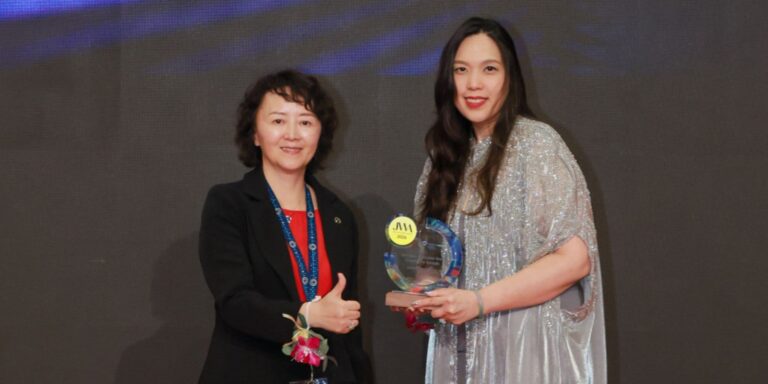
Amira Hatta receives a NextGen Coloured Gem Excellence Award
Amira Hatta, Managing Director of ICA | GemLab, is one of 18 recipients of the NextGen Coloured Gem Excellence Awards 2026, run by the Jewellery World Awards.
 News · Announcement
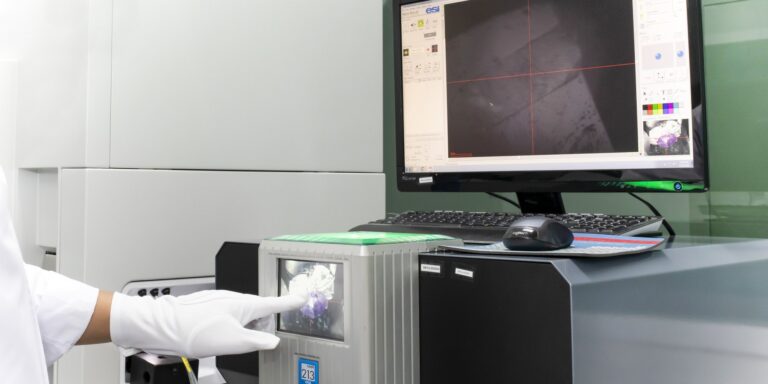
How AI supports our testing workflow
Each stone now passes hundreds of AI-supported checks before a gemologist issues the finding. What that changes, and what it does not.
Commission a report.
From identification to bespoke monographs, the laboratory provides documentation matched to the significance of the stone.
Turnaround
Standard turnaround is 5–7 working days for 2-Fold Reports. Premium Reports and Monographs are scoped individually.
Trade submissions
Parcels, recurring lots, and high-volume submissions are quoted individually. Contact the laboratory to discuss logistics.