


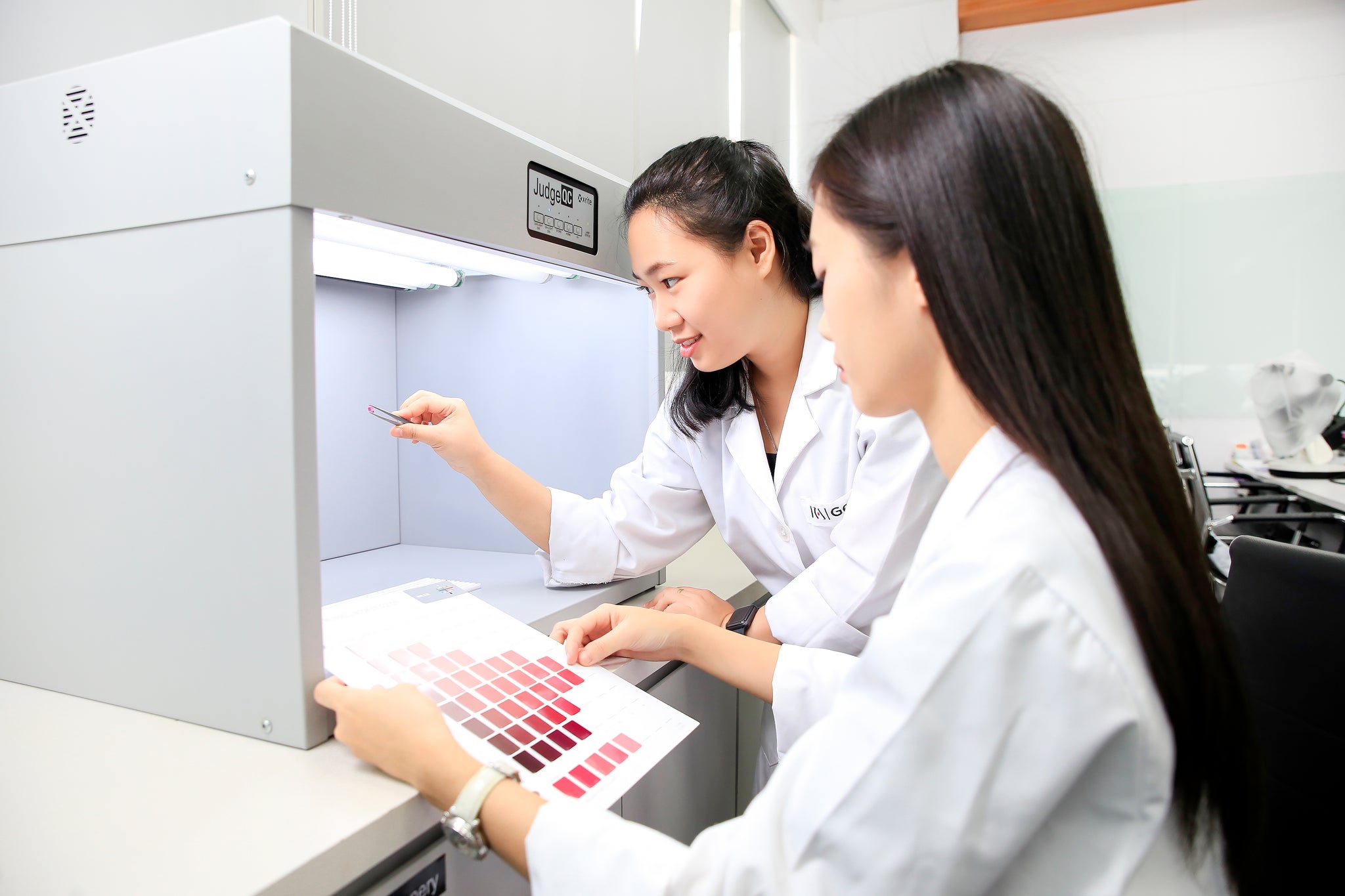
Our study of Paraíba tourmaline from Ethiopia is published
A study of 69 Paraíba and copper-bearing tourmalines from the new Abuloo deposit, including the trace element fingerprint that separates them from Brazil, Nigeria and Mozambique.
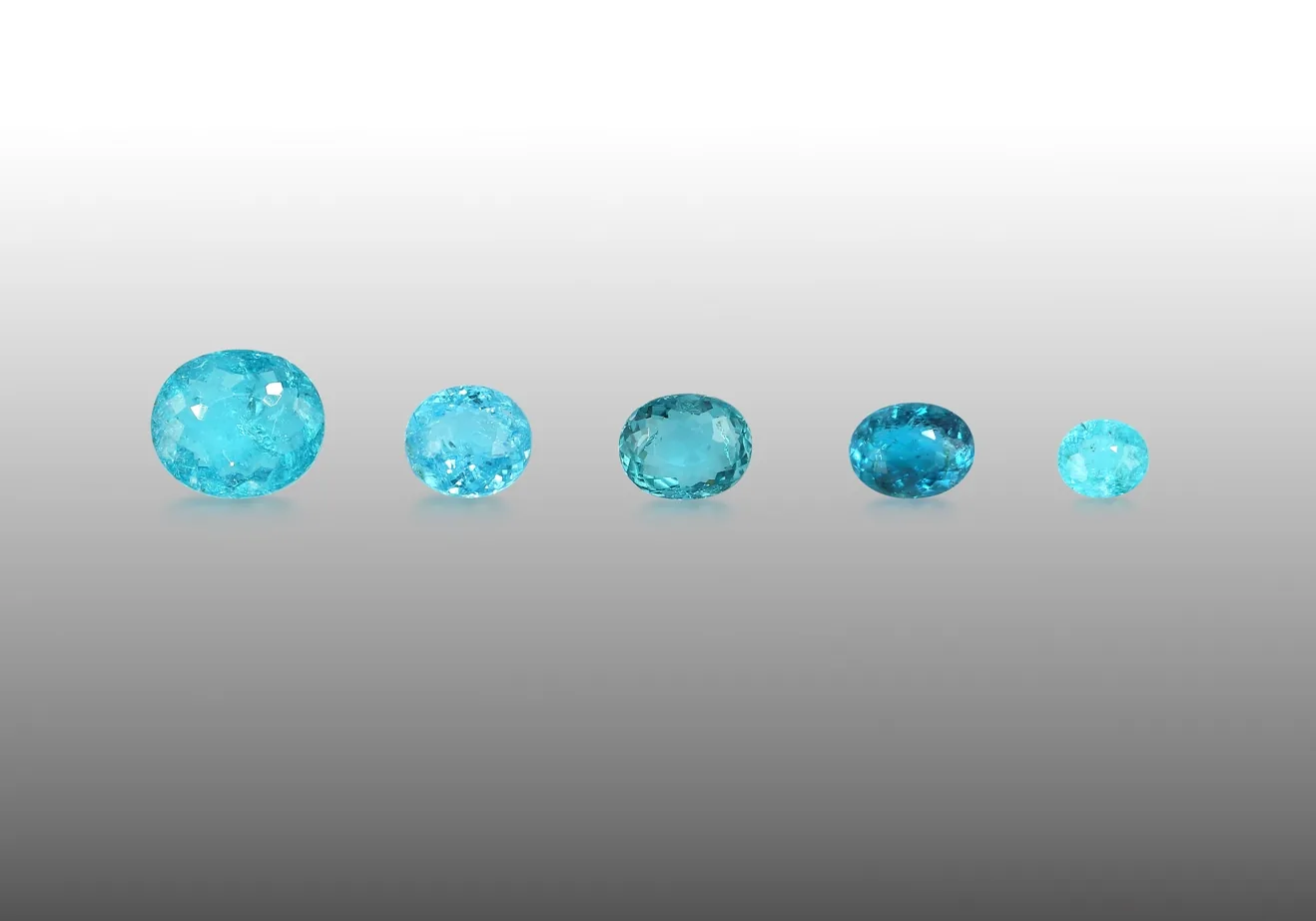
Bangkok, 23 October 2026. ICA | GemLab has published a study of Paraíba and copper-bearing tourmaline from the deposit near Abuloo in Ethiopia’s Oromia Region, which emerged as a source of gem-quality material this year.
The study examined 69 stones, 64 rough and five faceted, by microscopy, ultraviolet-visible-near infrared (UV-VIS-NIR), Raman and FTIR spectroscopy, and laser ablation inductively coupled plasma mass spectrometry (LA-ICP-MS). It was carried out by Yenruedee Lhongsomboon, Dr. Dietmar Schwarz and Kanyarat Chaiphong.
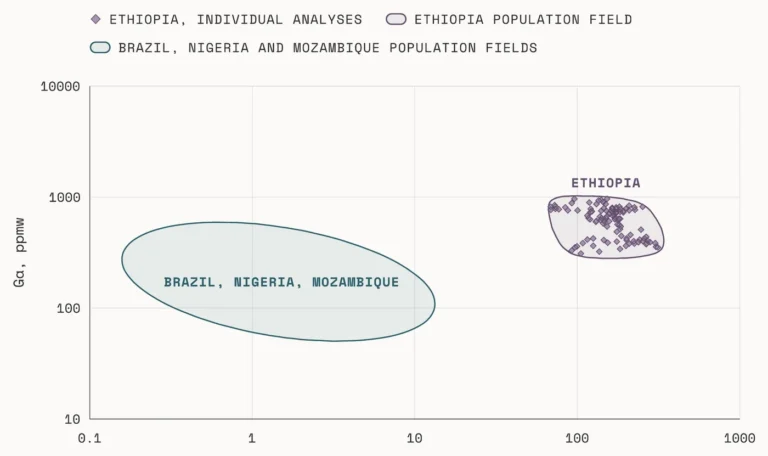
Its main finding is a chemical fingerprint. Vanadium, gallium and lead place the Ethiopian material in its own compositional field, clearly separated from Paraíba tourmaline from Brazil, Nigeria and Mozambique. The study also records that no locality-specific inclusion was observed, so origin for this material rests on chemistry and spectroscopy rather than on microscopy.
“A new source raises two questions for a buyer: what the stone is, and where it formed. This study answers the second one with measurements, and states plainly what the microscope cannot tell you.”
Amira Hatta, Managing Director, ICA | GemLab Global
Dr. Schwarz co-authored the 2006 study that applied LA-ICP-MS fingerprinting to Paraíba-type tourmaline from Brazil, Nigeria and Mozambique (Abduriyim et al., Gems & Gemology, Vol. 42, No. 1). The Ethiopian study applies the same approach to a fourth source.
The full study, with all figures and references, is published as an Insights article and is available as a PDF. Three shorter articles cover the questions the trade is asking: whether Ethiopian material is really Paraíba, where the colour comes from, and how origin is determined.
Stones can be submitted for testing at the laboratory in Bangkok. See origin determination or plan a visit.
 News · Press release
ICA | GemLab to Open Gemological Laboratory in Surat, India, in October 2026
The laboratory will open in Surat, Gujarat, in October 2026, issuing diamond, coloured gemstone and jewellery reports for manufacturers, traders, retailers and consumers in India.
 News · Press release
Amira Hatta receives a NextGen Coloured Gem Excellence Award
Amira Hatta, Managing Director of ICA | GemLab, is one of 18 recipients of the NextGen Coloured Gem Excellence Awards 2026, run by the Jewellery World Awards.
 News · Announcement
How AI supports our testing workflow
Each stone now passes hundreds of AI-supported checks before a gemologist issues the finding. What that changes, and what it does not.
Commission a report.
From identification to bespoke monographs, the laboratory provides documentation matched to the significance of the stone.
Turnaround
Standard turnaround is 5–7 working days for 2-Fold Reports. Premium Reports and Monographs are scoped individually.
Trade submissions
Parcels, recurring lots, and high-volume submissions are quoted individually. Contact the laboratory to discuss logistics.