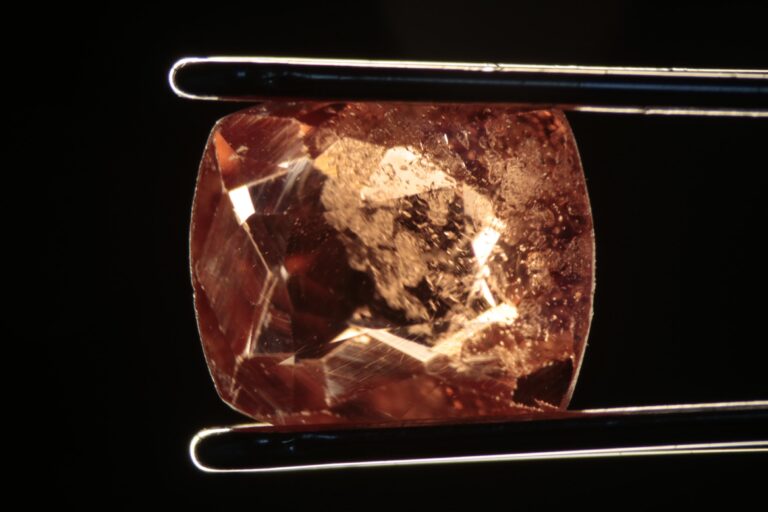
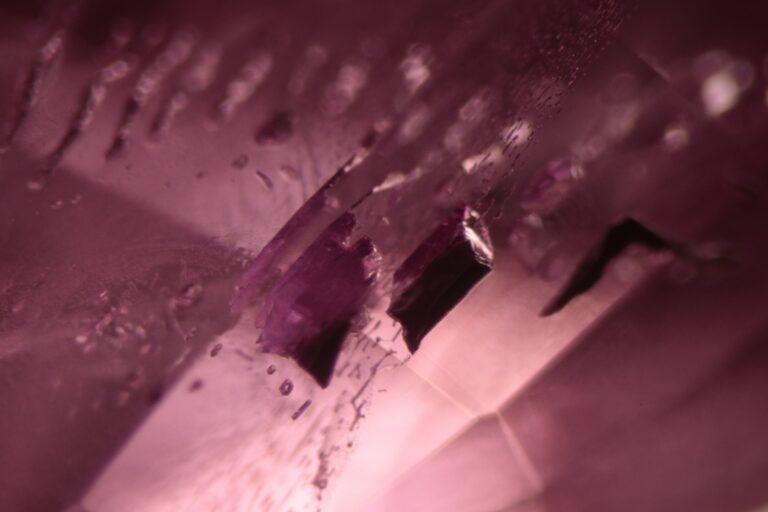
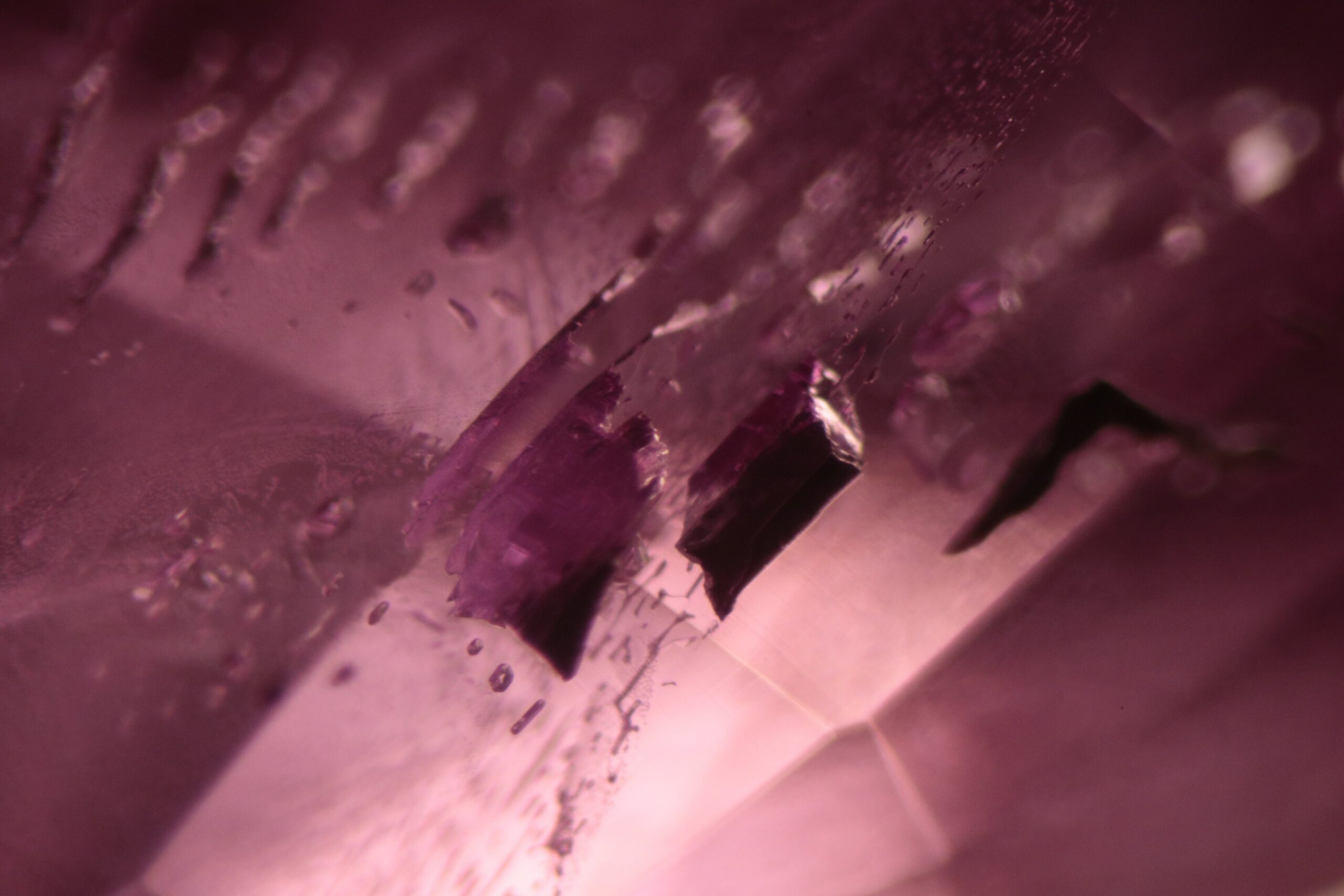
Sapphire, a prized variety of corundum, is valued for its durability, brilliance, and range of color tones. Its color and character arise from trace elements that become part of the crystal during formation. Trace elements such as chromium (Cr), iron (Fe), titanium (Ti), and vanadium (V) produce various hues in corundum (Emmett et al., 2017; Hughes, 2017). These gemstones form in diverse geological environments, and their internal features preserve important information about their natural history. The specimen examined for this study is an unheated vivid pink sapphire. Its color arises primarily from trace chromium (Hughes, 2017). Beyond color, the internal features of pink sapphire provide evidence of its natural origin and formation conditions.
Crystal Inclusions and Strain Features
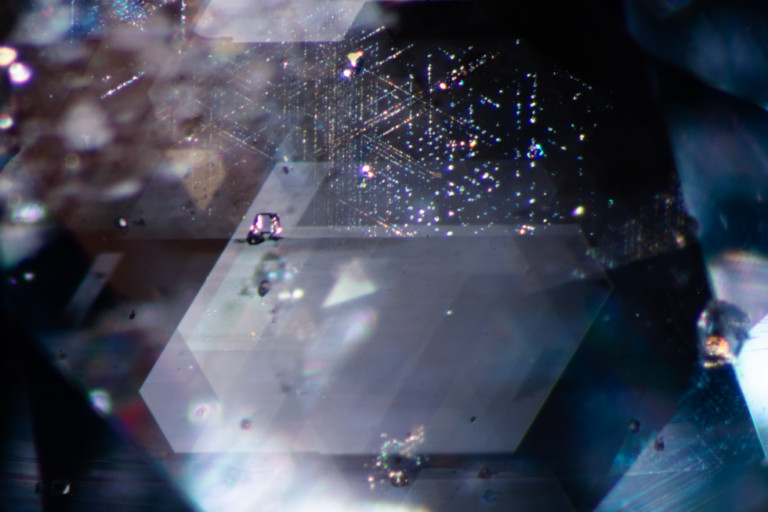
Internal features observed in this unheated sapphire are shown in Figures 1 and 2.
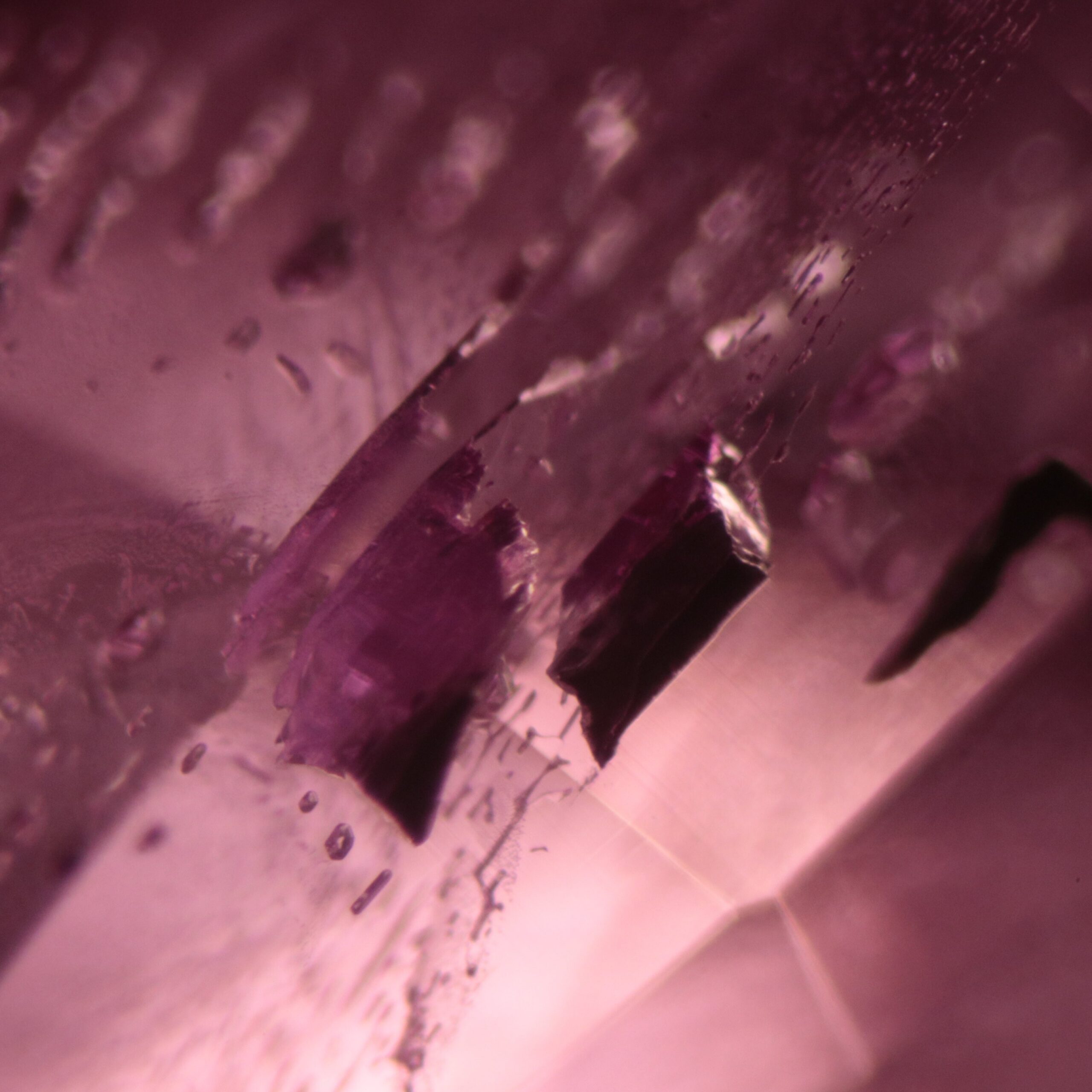
Figure 1. Elongated blocks with high luster surface crystal inclusions. Photomicrograph by Kanokwan Dokprom; field of view 3.00 mm.
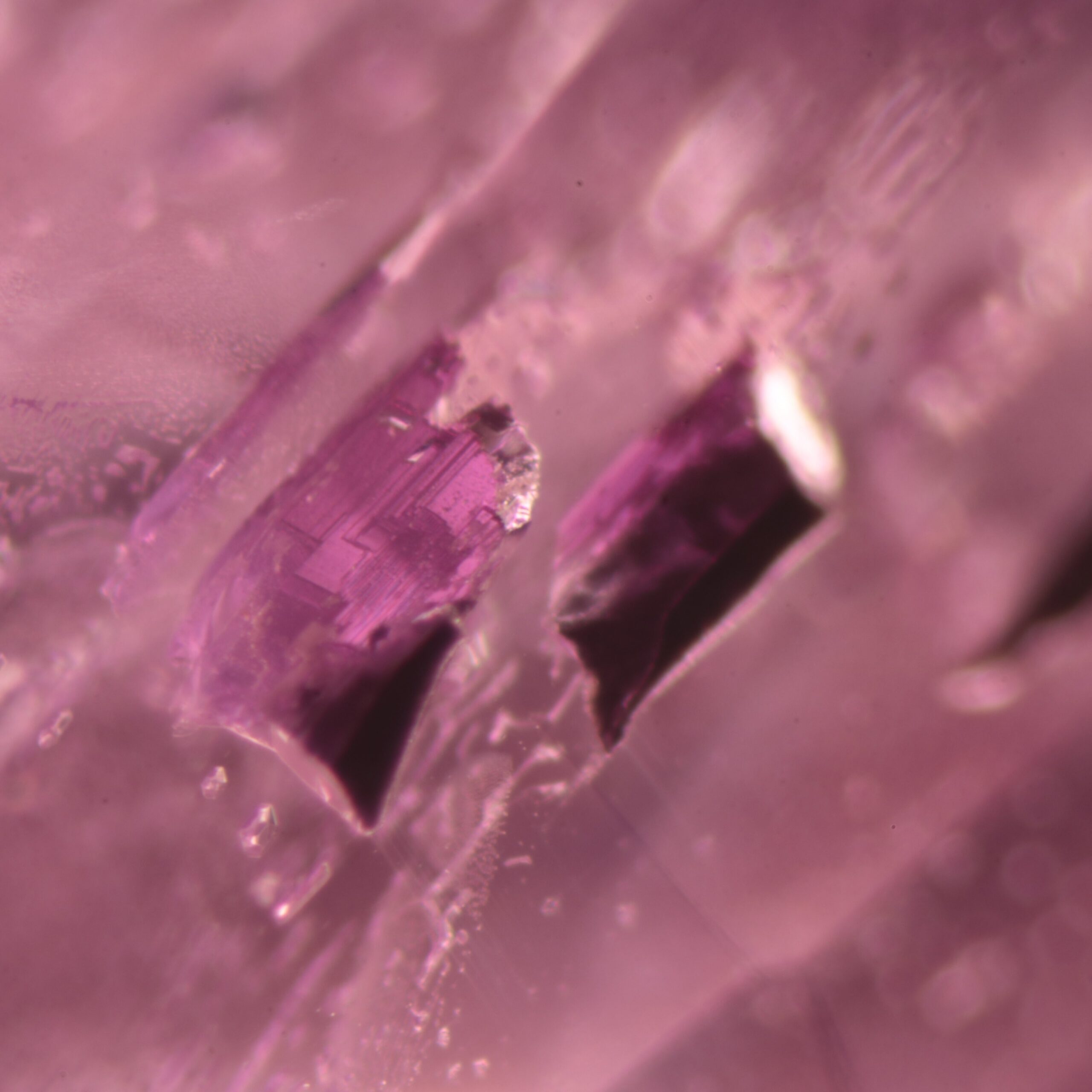
Figure 2. Zoom in of sharply edged crystal inclusions. Photomicrograph by Kanokwan Dokprom; field of view 3.00 mm.
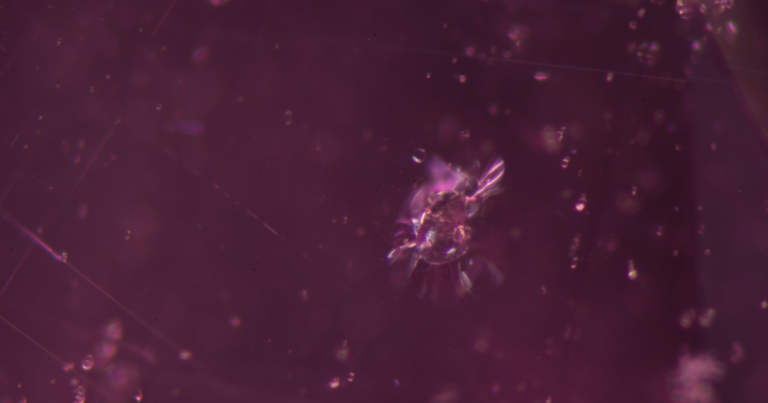
The sapphire displays well-defined crystal inclusions, seen as sharply edged, elongated blocks with strong internal reflections. Their angular form and boundaries indicate naturally trapped mineral phases during the stone’s early growth stages. Surrounding these inclusions are subtle stress features consistent with internal strain patterns. Figures 3 and 4 show iron-strain patterns within healed fissures.
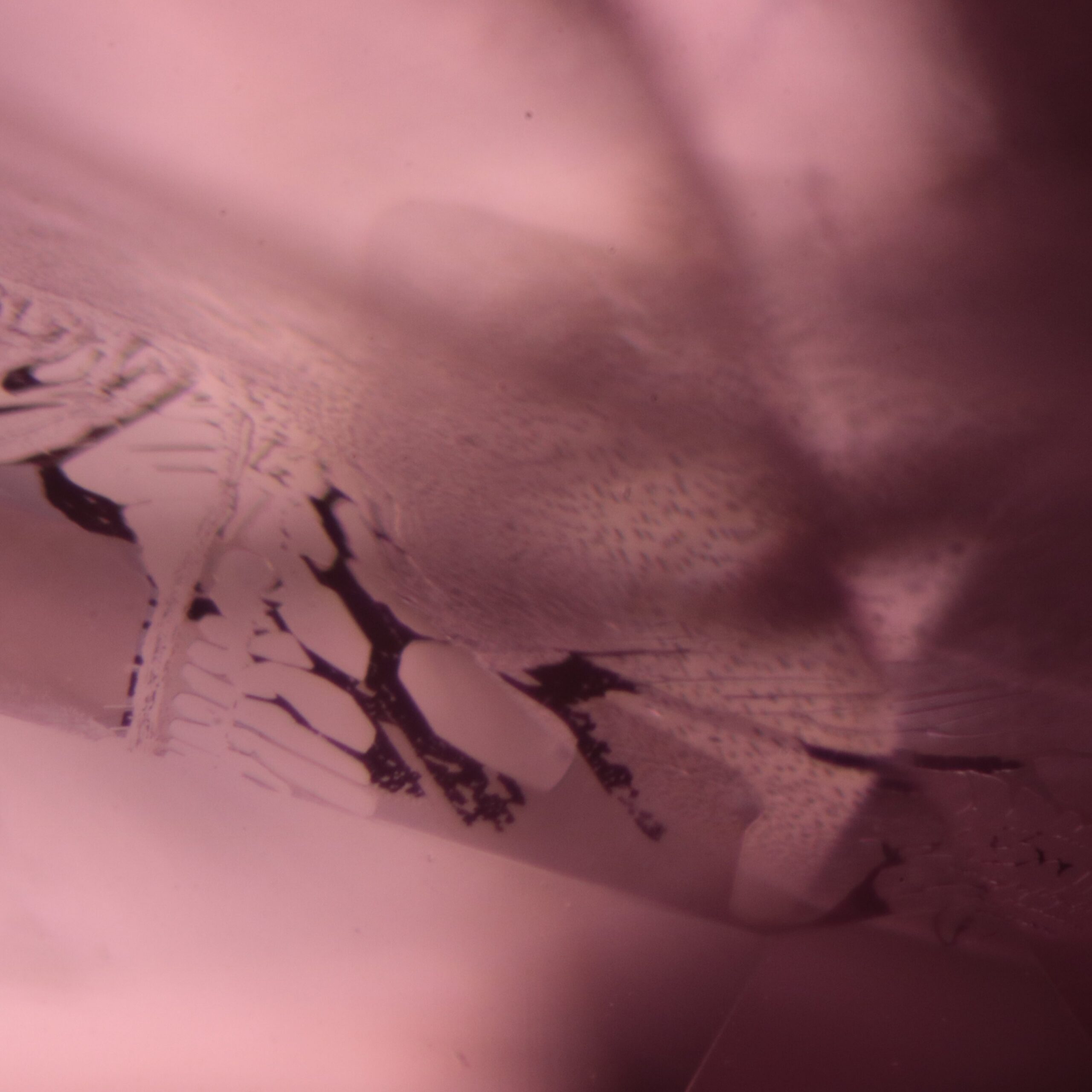
Figure 3. Iron stain filled in healed fissures. Photomicrograph by Kanokwan Dokprom; field of view 2.00 mm.
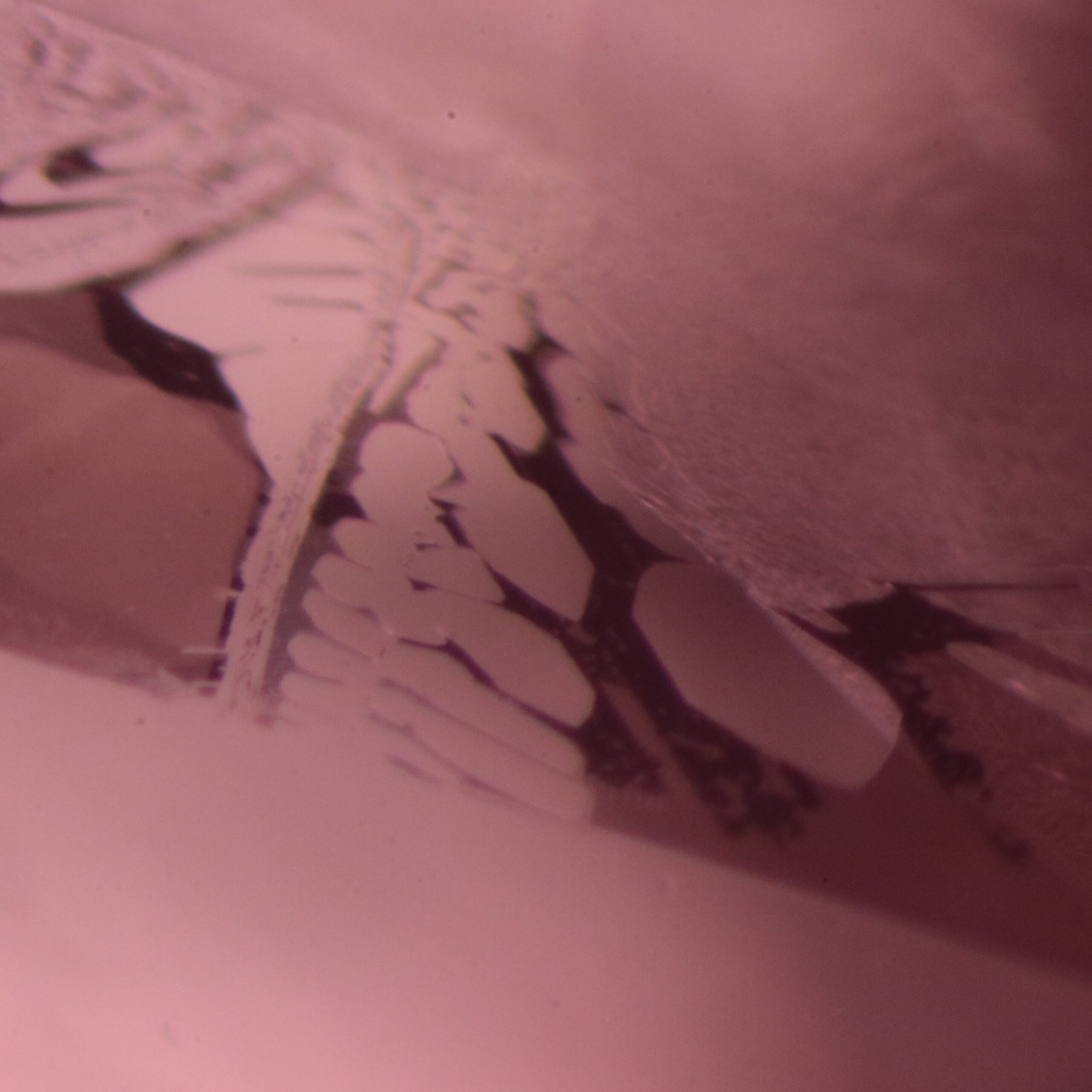
Figure 4. Zoom in of iron stain filled with healed fissures. Photomicrograph by Kanokwan Dokprom; field of view 3.00 mm.
These patterns display fine strain distribution and local distortion within the crystal lattice. Such features are typical of natural corundum and reflect the geological conditions the stone experienced over time (Schmetzer et al., 2015; Palke et al., 2019). The term “iron staining” refers to the deposition of iron oxides or hydroxides along fractures and healing features within the crystal structure. Crystal inclusions and iron-strain patterns are among the most diagnostic features in natural sapphire. These characteristics can help gemologists understand the stone’s formation environment. Such features provide evidence of the sapphire’s natural origin rather than synthetic manufacture, as they form an internal record of the geological processes that shaped the crystal. They verify authenticity and reveal aspects of the stone’s geological history.
Pink Sapphire in the Gemstone Market
Pink sapphire holds a strong position in the contemporary gemstone market, valued for its color and increasing demand among collectors and jewelry buyers. Market value is influenced primarily by color saturation, clarity, and carat weight, with vivid, evenly colored stones commanding higher prices (CIBJO, 2023). Untreated pink sapphires, especially those with strong pink tones, are considered premium and can reach substantial values in the market. Geographic origin and gemological reporting further influence a stone’s market position, as sapphires from established mining localities and accompanied by recognised gemological reports offer greater assurance of authenticity and quality. Overall, pink sapphire remains a sought-after gemstone, valued for both its aesthetic qualities and relative rarity compared to other colored stones.
Conclusion
The examination of this natural pink sapphire specimen provides insight into characteristic internal features that can be used for authentication and origin determination. The presence of well-formed crystal inclusions and iron-strain patterns in healed fissures offers diagnostic evidence of natural formation. These features, when examined collectively, contribute to a comprehensive understanding of the specimen’s geological history and provide markers that distinguish natural stones from synthetic counterparts.
References
CIBJO (2023). The Gemstone Book. CIBJO, The World Jewellery Confederation.
Emmett, J.L., Scarratt, K., McClure, S.F., Moses, T., Douthit, T.R., Hughes, R., Novak, S., Shigley, J.E., Wang, W., Bordelon, O., and Fritsch, E. (2017). Beryllium Diffusion of Ruby and Sapphire. Gems & Gemology, 53(1), pp. 84–135.
Hughes, R.W. (2017). Ruby & Sapphire: A Gemologist’s Guide. RWH Publishing, Bangkok.
Palke, A.C., Saeseaw, S., Renfro, N.D., Sun, Z., and McClure, S.F. (2019). Geographic Origin Determination of Ruby. Gems & Gemology, 55(4), pp. 580–612.
Schmetzer, K., Bernhardt, H.-J., and Balmer, W.A. (2015). Inclusions of Wüstite (FeO) and Selenium in Natural Corundum from Mogok, Myanmar. Journal of Gemmology, 34(6), pp. 502–507.