Yenruedee Lhongsomboon, Dr. Dietmar Schwarz and Kanyarat Chaiphong, ICA | GemLab, Bangkok. Published 23 October 2026. Download the full study as a PDF.
Sixty-nine Paraíba and copper-bearing tourmalines from the new Ethiopian deposit at Abuloo were examined by microscopy, spectroscopy and chemical analysis. Their trace element chemistry, and vanadium, gallium and lead in particular, places them in a compositional field clearly separate from Paraíba tourmaline from Brazil, Nigeria and Mozambique. No internal feature specific to the locality was observed, so origin for this material rests on chemistry rather than on inclusions.
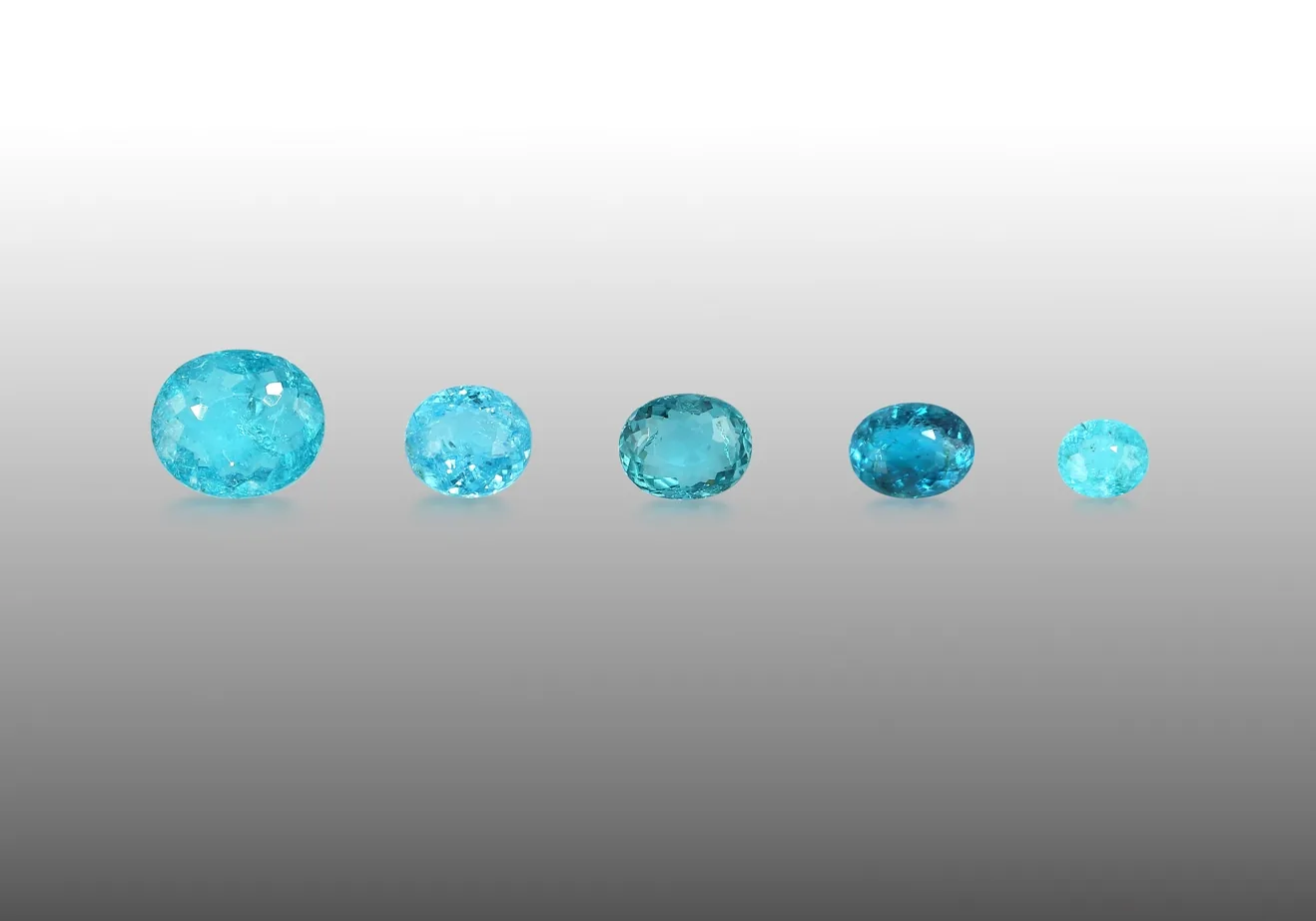
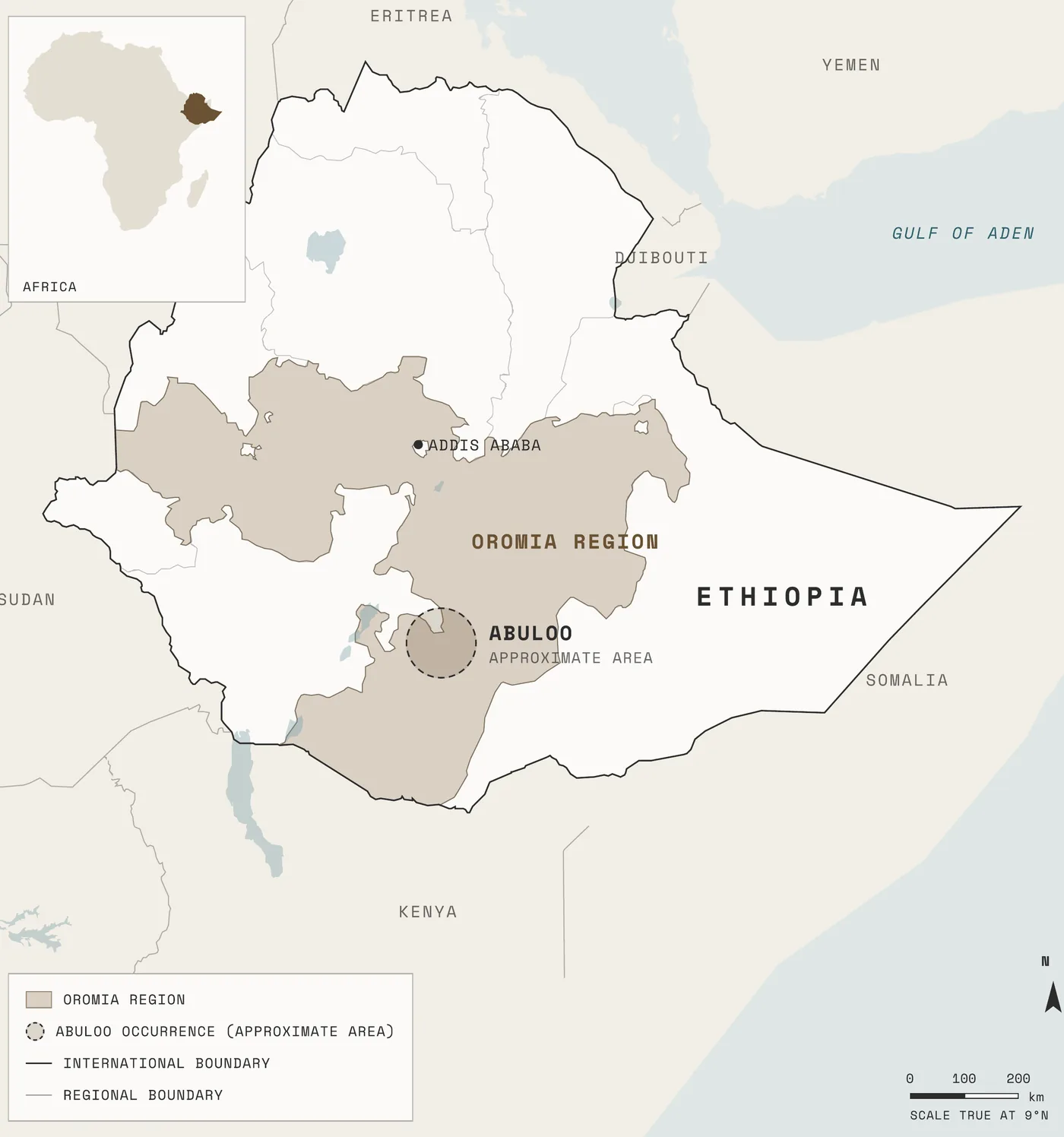
A deposit near the village of Abuloo, in Ethiopia’s Oromia Region, has become a source of gem-quality Paraíba and copper-bearing tourmaline (Pardieu et al. 2026; Milisenda and Guo 2026; Sissay 2026). The material covers a wide range of colour, saturation and transparency, including stones described as black and as near-colourless. That range makes the occurrence worth documenting in detail.
First notes on the material were published in 2026 by other laboratories and researchers (Pardieu et al. 2026; Milisenda and Guo 2026; SSEF 2026; GIA and Gübelin 2026; Sissay 2026). This study adds a full microscopic, spectroscopic and chemical characterisation, and a comparison with the established sources in Brazil, Nigeria and Mozambique.
Where the material comes from
Tourmaline of this type forms in pegmatites, coarse-grained rocks that crystallise from the last, water-rich fraction of a cooling granitic melt. The Abuloo occurrence sits in the Oromia Region of Ethiopia.
Materials and methods
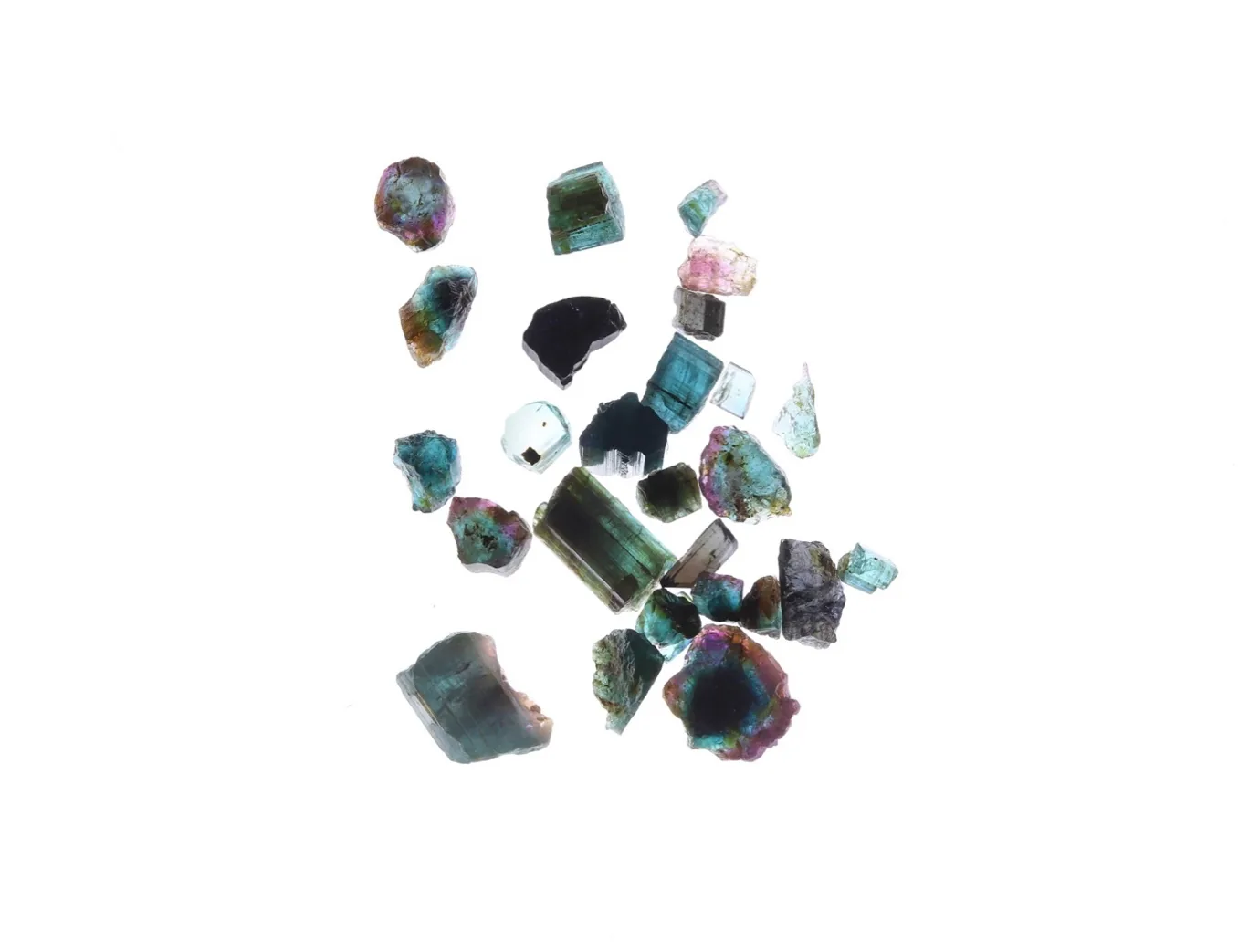
Sixty-four rough and five faceted tourmalines from the Oromia Region were documented with standard gemological instruments, including microscopy for the internal features, and with the analytical techniques below.
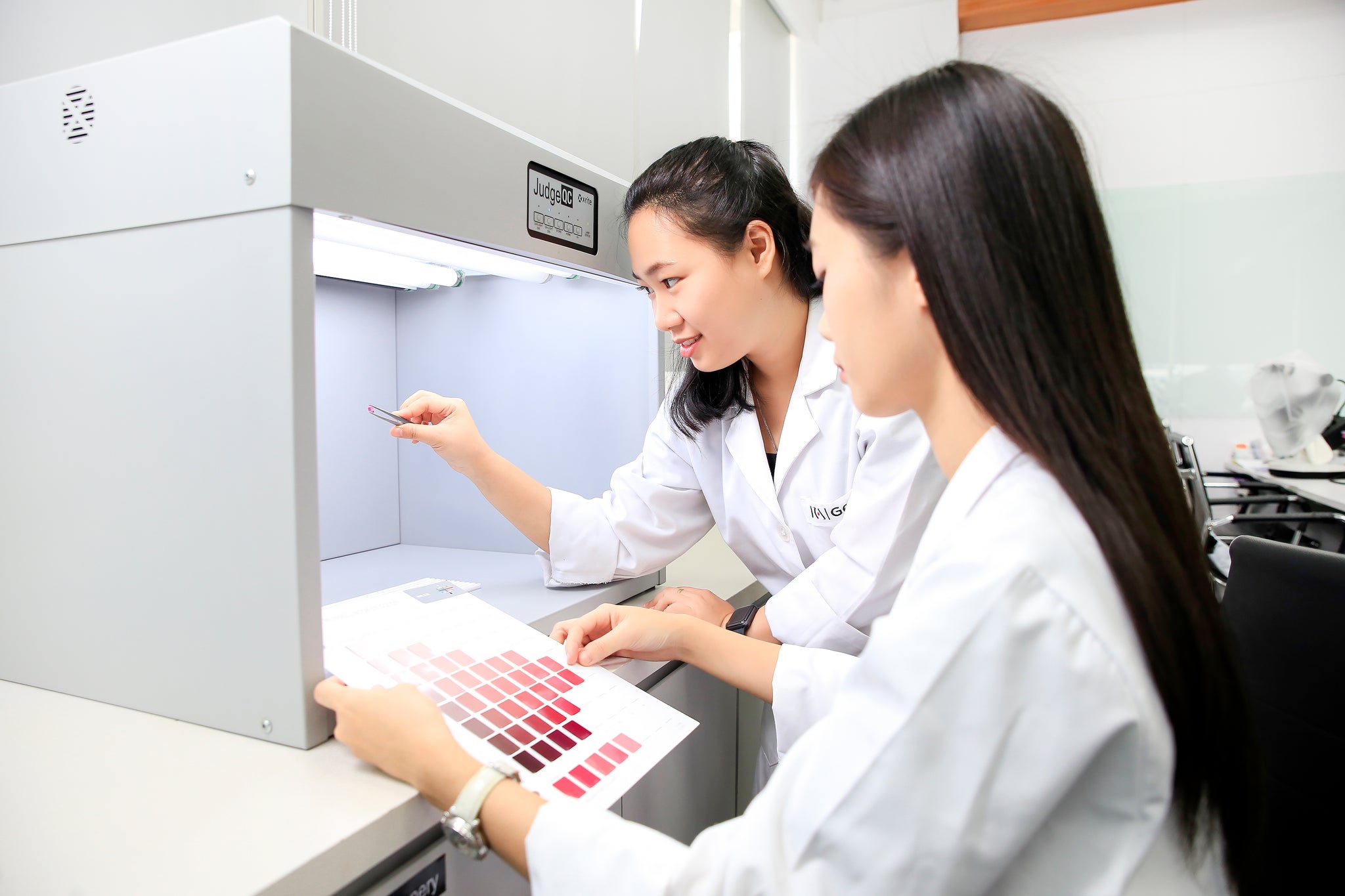
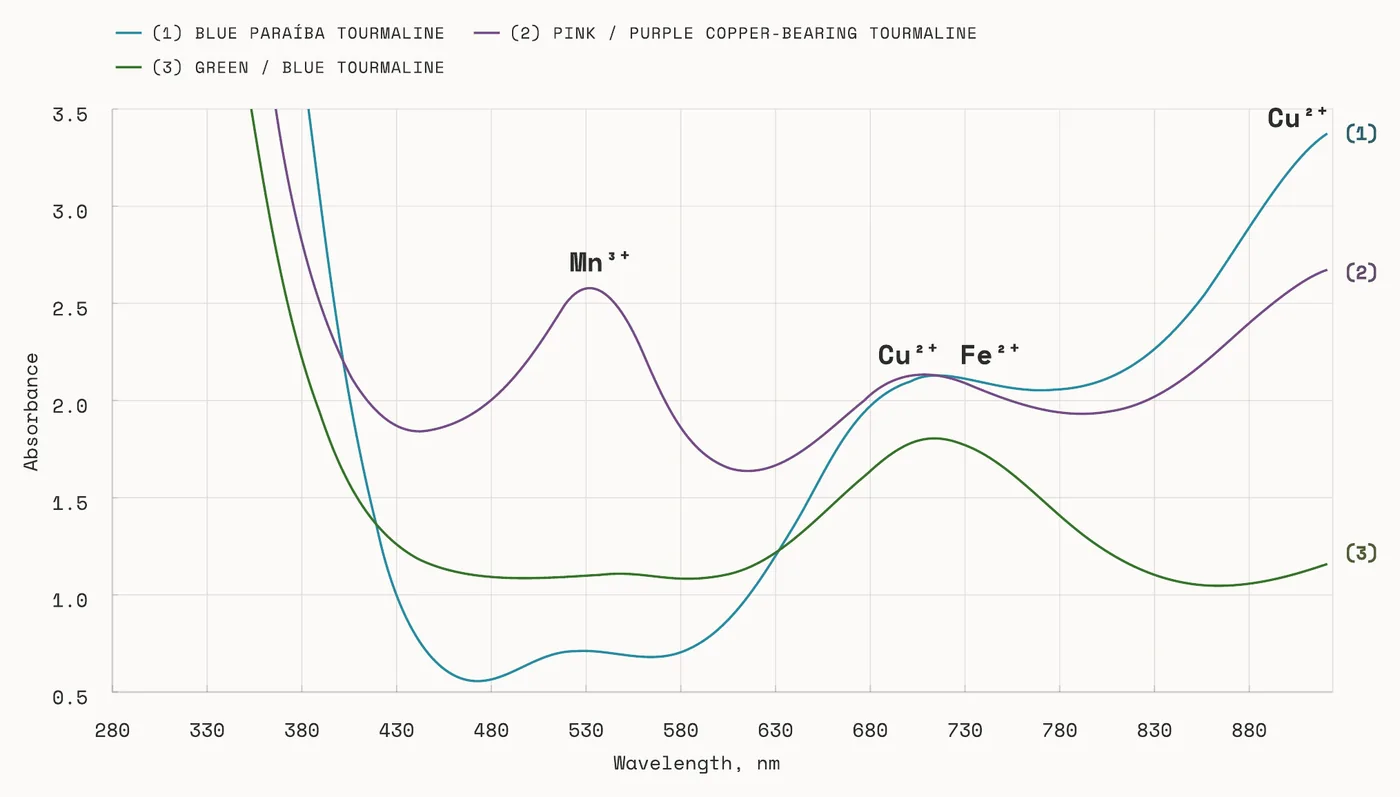
Ultraviolet-visible-near infrared spectrophotometry (UV-VIS-NIR) shows which elements are causing a stone’s colour. Absorption spectra were collected from 280 to 900 nm on a JASCO V-770 spectrophotometer. The spectra are combinations, with bands related to Cu2+, Fe2+ and Mn3+.
Raman and Fourier transform infrared (FTIR) spectroscopy were also applied. The Raman and FTIR spectra show the standard patterns for tourmaline.
Laser ablation inductively coupled plasma mass spectrometry (LA-ICP-MS) measures the concentration of trace elements, down to parts per million by weight (ppmw). All 69 samples were analysed on a Thermo Fisher Scientific iCAP Q ICP-MS coupled to a Q-switched Nd:YAG laser ablation device operating at 213 nm. Laser conditions were a 50 µm spot, a fluence of about 10 J/cm2 and a repetition rate of 10 Hz. The ICP-MS was operated at about 1,550 W with a nebuliser gas flow of about 1.0 L/min. Helium was the carrier gas in the ablation unit, at about 0.8 L/min.
Internal features
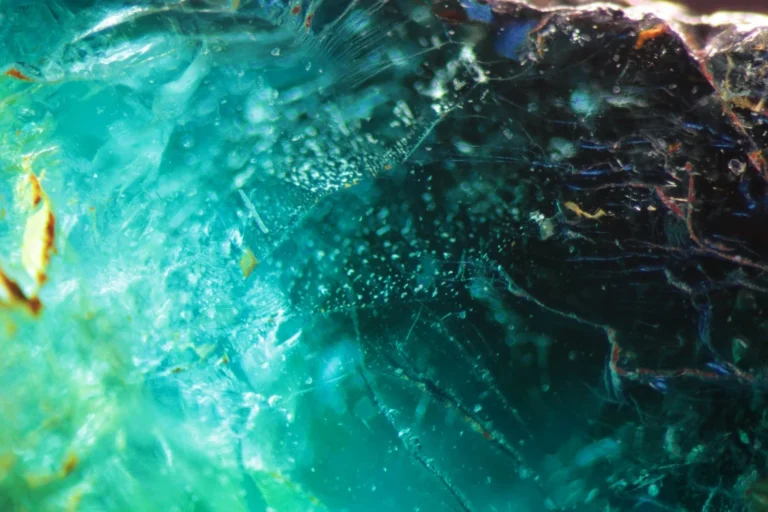
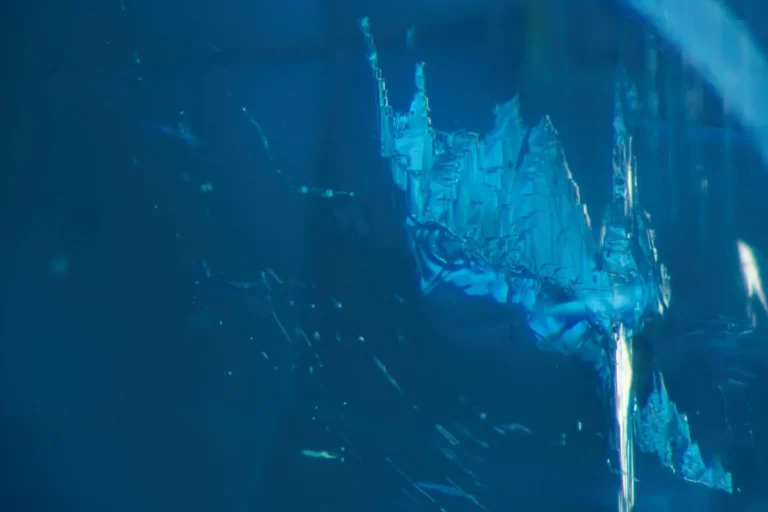
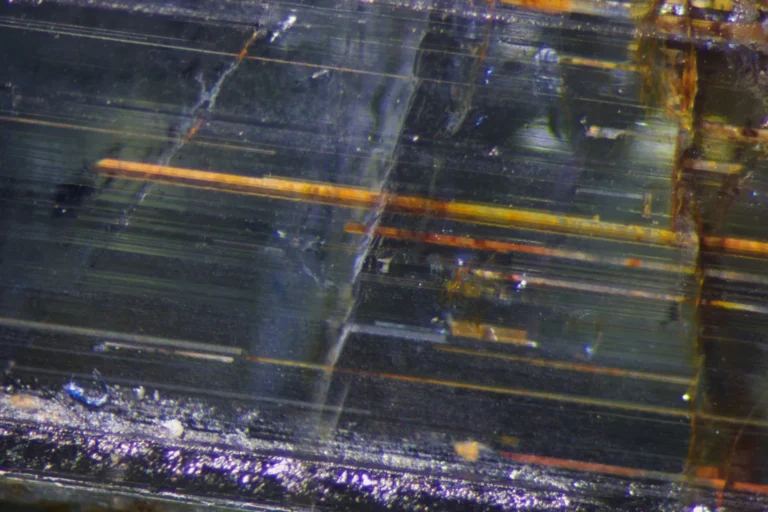
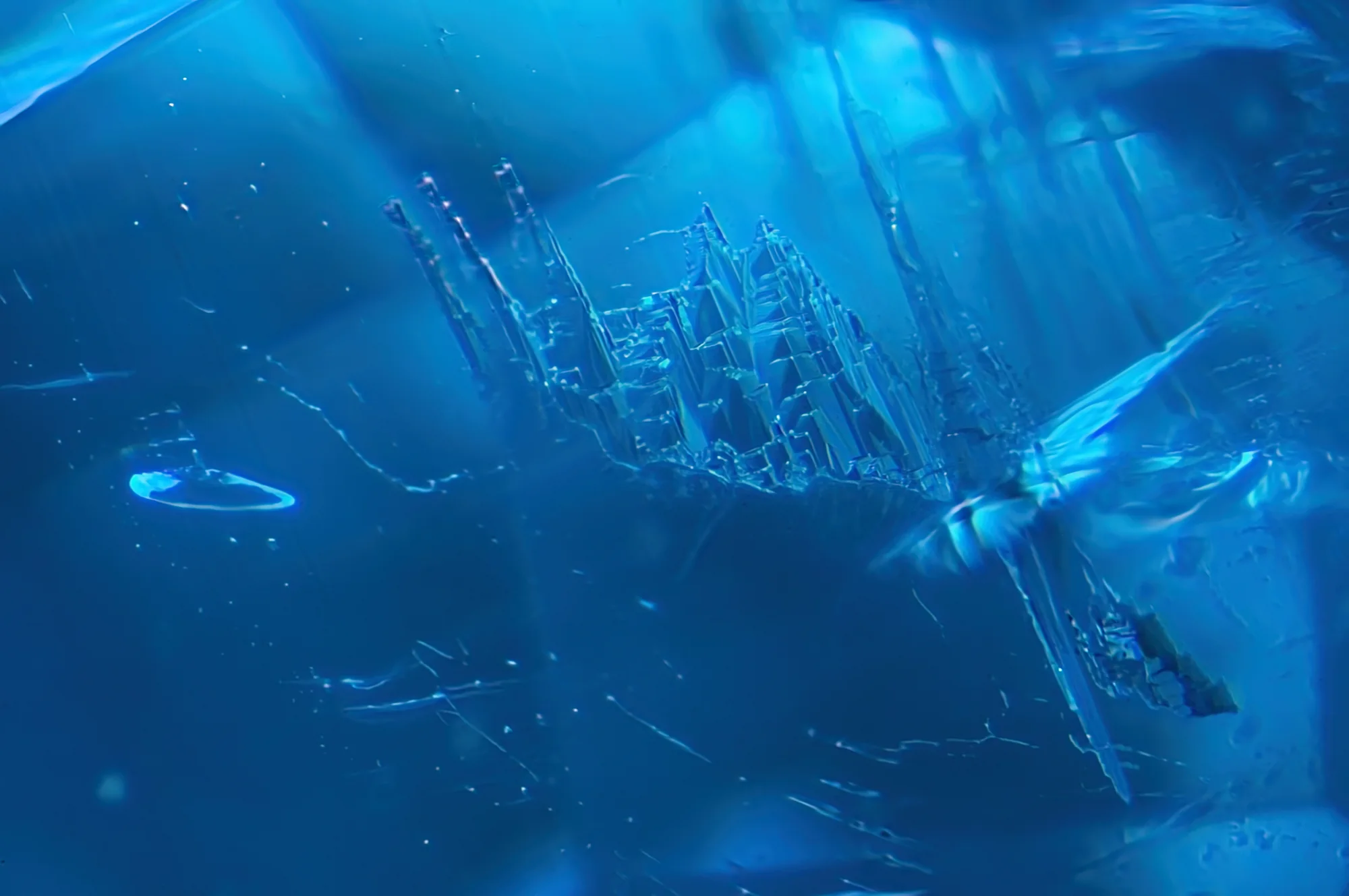
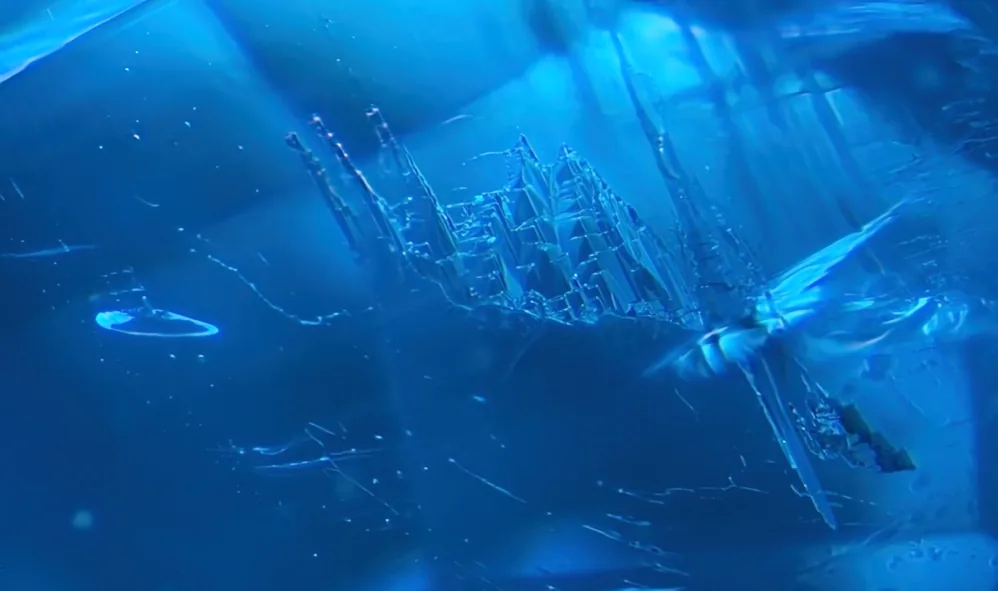
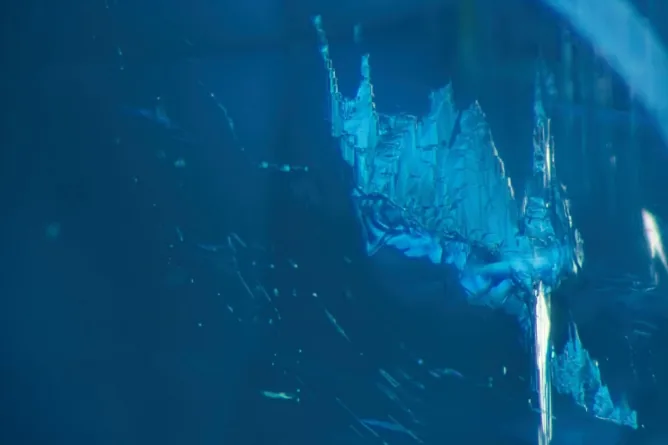
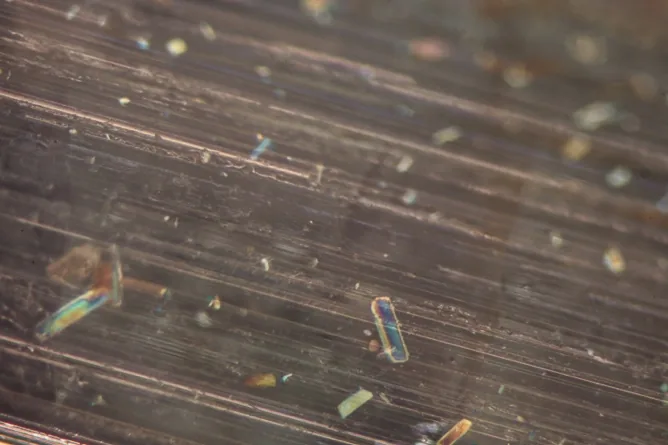
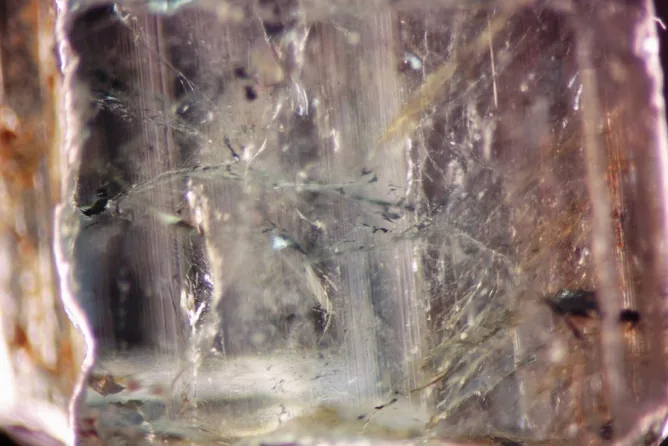
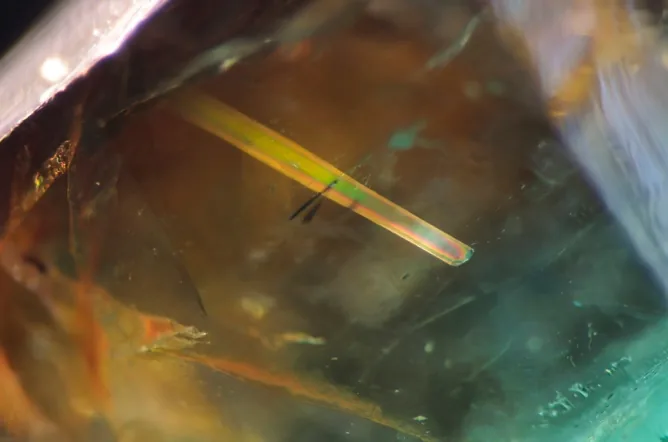
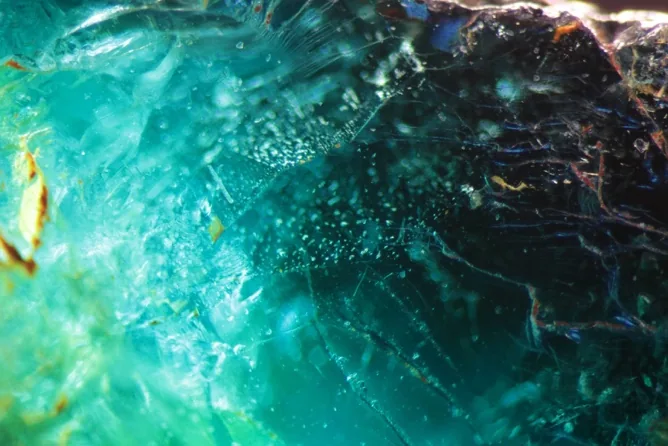
Microscopy revealed partially healed fissures with geometric cavities and coarse, ice-crust textures. Solid mineral inclusions are relatively rare. Some of the partially healed fissures are developed as trichites, hair-like capillaries holding remnants of the hydrothermal fluids from which the tourmaline crystallised. Others contain foreign iron staining material. Needle-like growth tubes run parallel to the c-axis of the host crystal, in places filled with orange-brown staining.
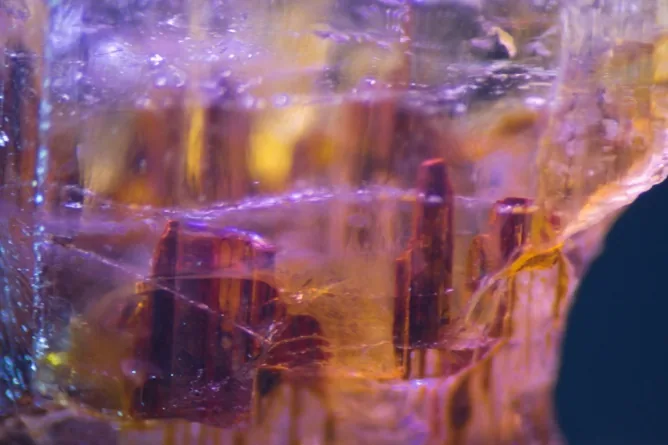
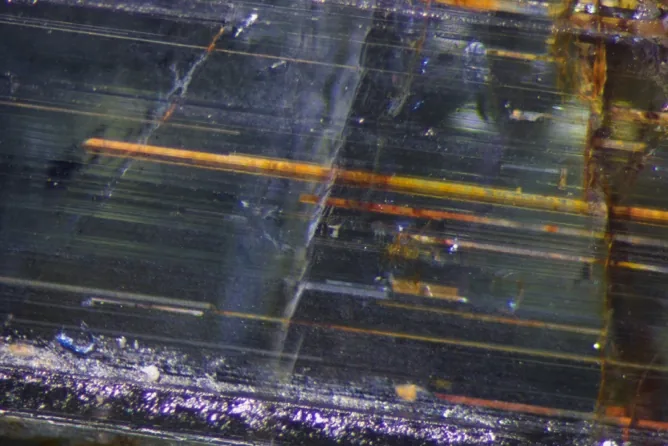
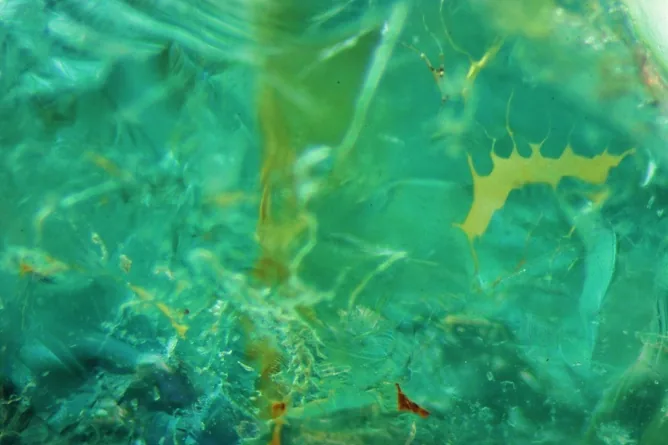
- (a) Elongated cavities containing brownish iron staining. Oblique fibre optic illumination, FOV 3.0 mm.
- (b) Partially healed fissures displaying coarse, ice crust-like textures. Bright field and polarised light illumination, FOV 2.0 mm.
- (c) Elongated, needle-like growth tubes oriented parallel to the tourmaline’s c-axis, with long-prismatic, colourless transparent crystals also present. Dark field and polarised lens, FOV 3.0 mm.
- (d) Needle-like growth tubes parallel to the host tourmaline’s c-axis, in part containing orange-brown staining material. Oblique fibre optic illumination, FOV 3.0 mm.
- (e) Partially healed fissures showing typical trichite textures. Dark field, FOV 4.6 mm.
- (f) Iridescent elongated flat crystal, with partially healed fissures containing yellow-orange iron staining. Bright field and polarised lens, FOV 3.6 mm.
- (g) Tiny crystal inclusions on a partially healed fissure plane. Dark field, FOV 2.2 mm.
- (h) Partially healed fissures containing brownish iron staining material. Dark field, FOV 2.2 mm.
Alt text for the set: Photomicrographs of inclusions in Ethiopian tourmaline, showing healed fissures, trichites, growth tubes and iron staining.
This inclusion scenario is characteristic of tourmaline in general and reflects growth in a pegmatite environment. Some of the examined samples showed indications of heat treatment. No locality-specific internal feature was observed. In other words, the microscope shows that these stones are natural tourmaline and how they grew, but nothing seen inside them points to Ethiopia rather than to another source.
Colour
Most of the samples show saturated hues from medium to intense. The UV-VIS-NIR spectra show broad absorption around 700 and 900 nm, attributed mainly to Cu2+; a further feature around 700 to 725 nm associated with Fe2+; and absorption between 500 and 550 nm attributed to Mn3+. Copper, iron and manganese in combination account for the range of colours seen in the Ethiopian material.
Vanadium is the exception worth noting. Some Ethiopian tourmalines carry high vanadium contents, up to about 1,000 ppmw, yet no vanadium-related absorption band was found even in the samples richest in it. On the evidence of these spectra, vanadium contributes little or nothing to the colour of this material, however useful it turns out to be for telling the source apart.
Chemical fingerprint
The LA-ICP-MS analyses show a distinctive trace element signature. The analysed tourmalines have compositions between elbaite and liddicoatite, two species in the tourmaline group that differ in which elements occupy particular sites in the crystal structure. The most important trace and minor elements are copper (Cu), manganese (Mn), iron (Fe), vanadium (V), bismuth (Bi), strontium (Sr), zinc (Zn), gallium (Ga) and lead (Pb).
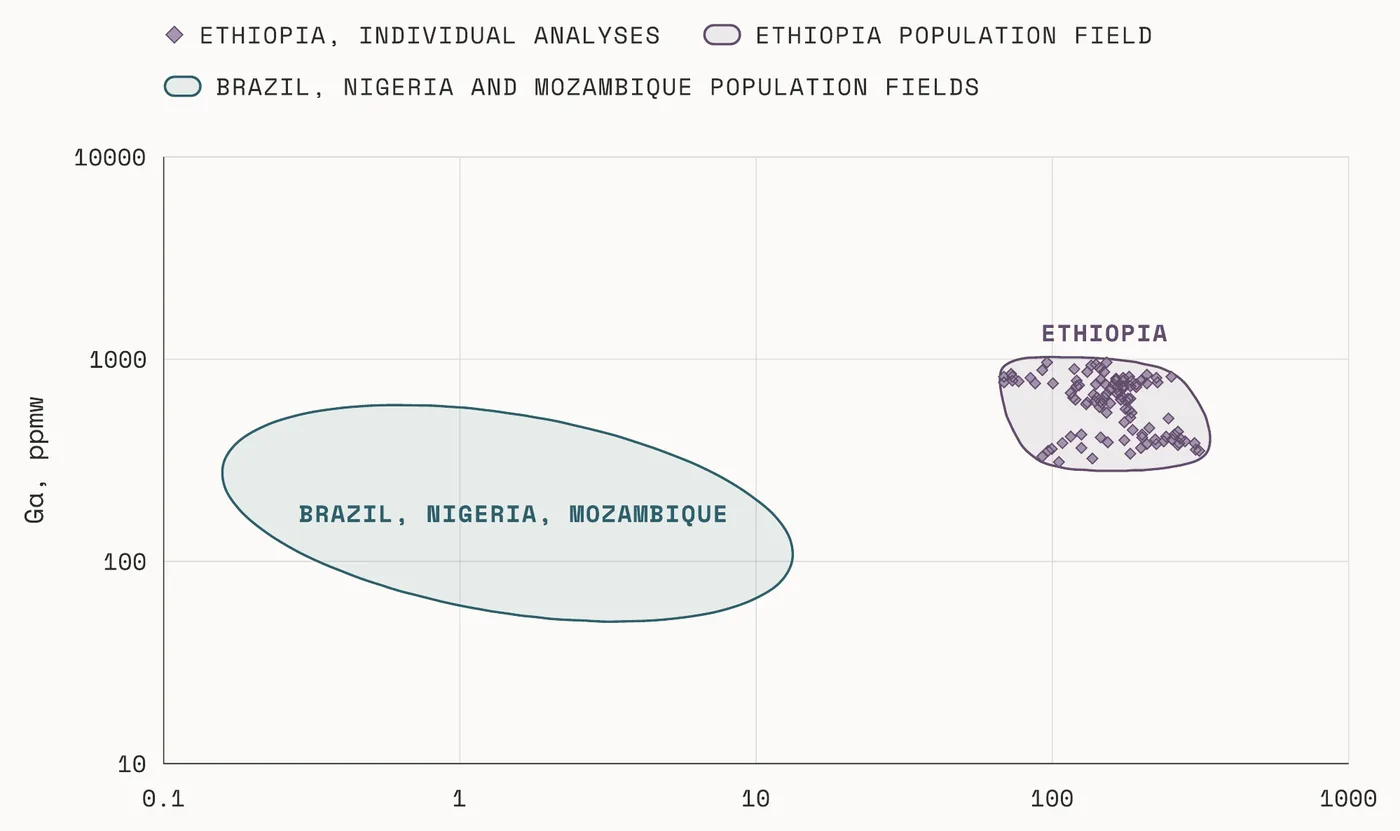
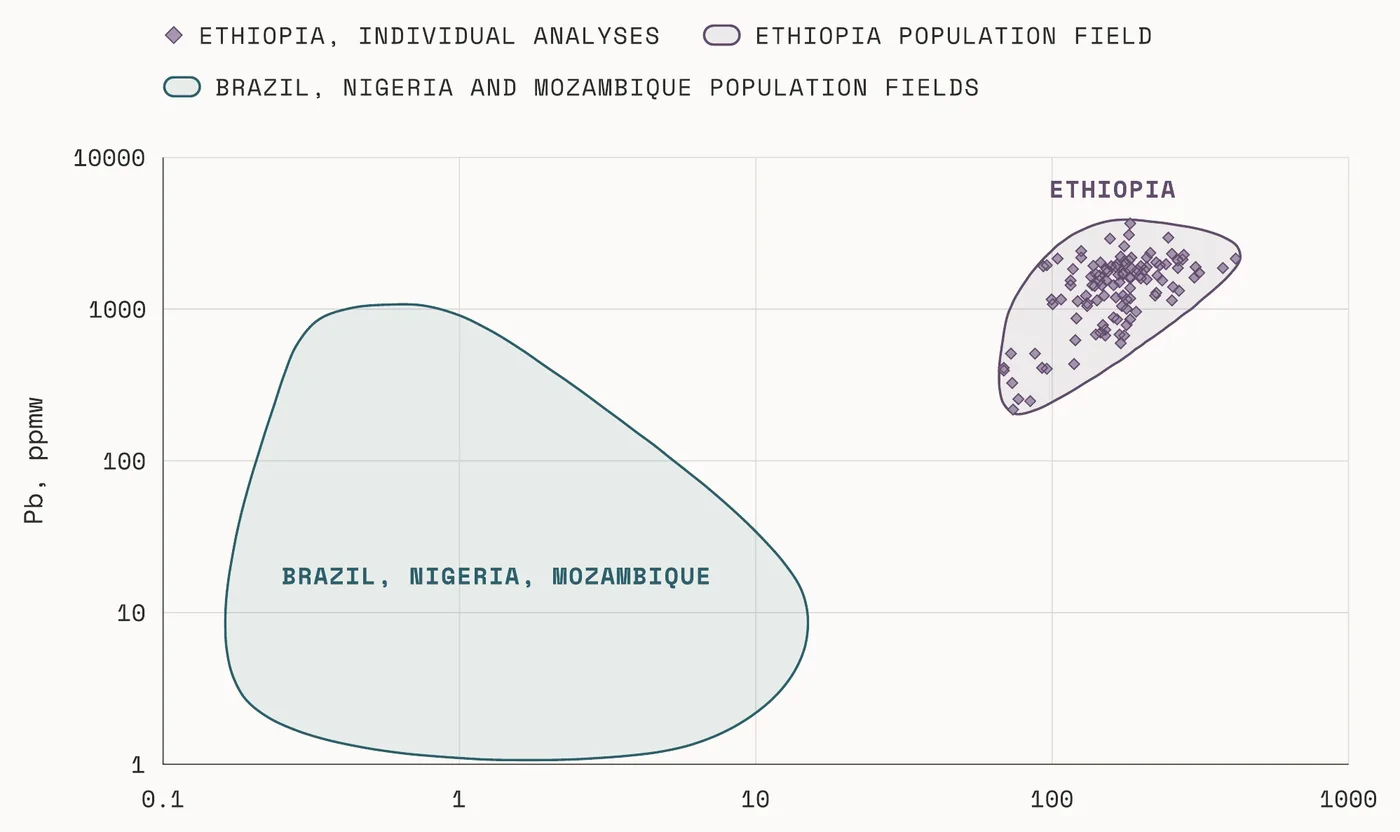
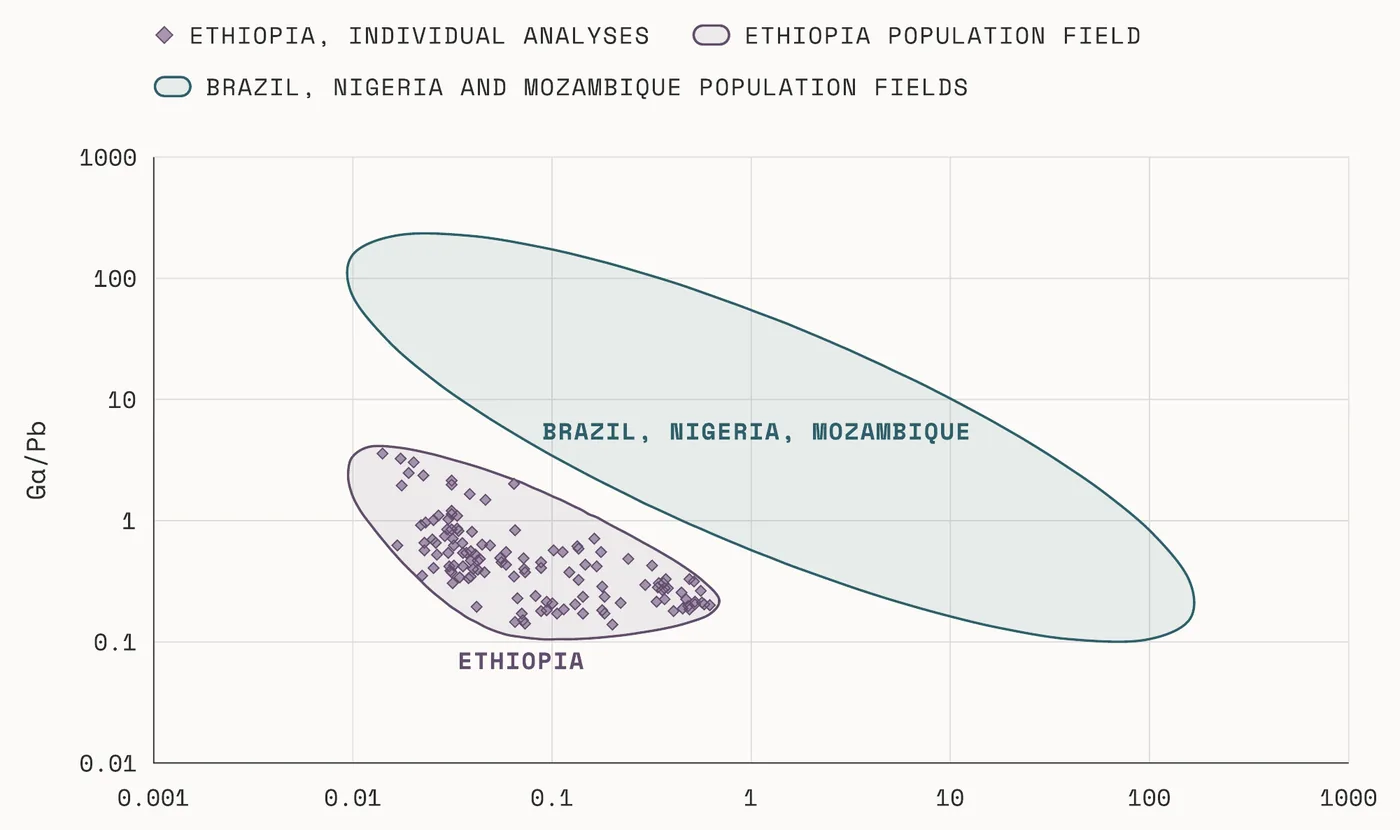
Plotted as binary correlation diagrams, these elements separate the Ethiopian stones from material of the established sources. Vanadium against gallium (Figure 7) and vanadium against lead (Figure 8) each place the Ethiopian samples in a well-defined field, clearly apart from the field occupied by Paraíba tourmalines from Brazil, Nigeria and Mozambique. The Sr/V against Ga/Pb ratios (Figure 9) show the same separation.
Conclusions
Paraíba and copper-bearing tourmalines from Abuloo show a wide range of colours, including distinctive ocean-blue hues, with notable transparency. Telling Paraíba-type material from other copper-bearing tourmaline requires the colour-causing elements to be considered, using the chemical data together with the interpretation of the UV-VIS-NIR spectra. The nomenclature applied here follows the terminology established by the Laboratory Manual Harmonisation Committee (LMHC Information Sheet No. 6, Version 8, 2023).
LA-ICP-MS analysis provides criteria for distinguishing the Ethiopian material from Paraíba and copper-bearing tourmalines of the established sources. Elevated vanadium, alongside high gallium and lead, is a useful discriminator against Brazil, Nigeria and Mozambique. An interpretation of geographic origin for these stones can be based on chemical fingerprinting, considering in particular vanadium, gallium and lead. The comparison here is with the three established sources. Material from other or newly found deposits would need to be assessed against its own reference data.
Microscopy alone will not answer the origin question for this material, since no internal feature is specific to the locality. The combination of spectroscopy and chemical analysis is what makes the distinction possible, and, as with all origin determination, it remains an interpretation of evidence rather than a guarantee.
Frequently asked questions
Where does Ethiopian Paraíba tourmaline come from?
From a deposit near the village of Abuloo in the Oromia Region of Ethiopia, reported in 2026.
Is Ethiopian material really Paraíba tourmaline?
It can be. “Paraíba” is a variety name, defined for laboratory reports by the LMHC rather than by a place of origin, so copper-bearing tourmaline from Ethiopia may qualify. The decision rests on the colour-causing elements and the stone’s appearance, established through spectroscopy and chemical analysis.
How is the origin of Paraíba tourmaline determined?
By comparing the stone’s trace element chemistry, measured by LA-ICP-MS, and its spectroscopic features with reference material from deposits of known location. For the Ethiopian material, vanadium, gallium and lead are the most useful elements.
Can inclusions tell you a tourmaline is Ethiopian?
No. The inclusions in this material are typical of tourmaline from pegmatites, and no locality-specific feature was observed in this study.
Does the vanadium affect the colour?
No vanadium-related absorption was found, even in samples containing up to about 1,000 ppmw. Copper, manganese and iron account for the colours observed.
Further reading
Three shorter articles cover the questions this study raises for buyers: is Ethiopian Paraíba real Paraíba, what gives Paraíba tourmaline its colour, and how the origin of Paraíba tourmaline is determined. For testing, see origin determination.
Acknowledgement
The samples examined for this study were made available by members of the trade. Photography by Meepanya T. Photomicrography by Swangrojn J., Lhongsomboon Y. and Pintana C.
How to cite
Lhongsomboon, Y., Schwarz, D., Chaiphong, K. (2026) The Hidden Signature of “Paraíba” and “Copper-Bearing” Tourmaline from Ethiopia. ICA | GemLab, Bangkok.
References
Abduriyim, A., Kitawaki, H. (2005) Cu- and Mn-bearing tourmaline: more production from Mozambique. Gems & Gemology, Vol. 41, No. 4, pp. 360 to 361.
Abduriyim, A., Kitawaki, H., Furuya, M., Schwarz, D. (2006) “Paraíba”-type copper-bearing tourmaline from Brazil, Nigeria, and Mozambique: chemical fingerprinting by LA-ICP-MS. Gems & Gemology, Vol. 42, No. 1, pp. 4 to 21.
Beurlen, H., de Moura, O.J.M., Soares, D.R., da Silva, M.R.R., Rhede, D. (2011) Geochemical and geological controls on the genesis of gem-quality “Paraíba tourmaline” in granitic pegmatites from northeastern Brazil. The Canadian Mineralogist, Vol. 49, No. 1, pp. 277 to 300.
Dutrow, B.L., McMillan, N.J., Henry, D.J. (2024) A multivariate statistical approach for mineral geographic provenance determination using laser-induced breakdown spectroscopy and electron microprobe chemical data: a case study of copper-bearing tourmalines. American Mineralogist, Vol. 109, No. 6, pp. 1085 to 1095.
Ertl, A., Giester, G., Schüssler, U., Brätz, H., Okrusch, M., Tillmanns, E., Bank, H. (2013) Cu- and Mn-bearing tourmalines from Brazil and Mozambique: crystal structures, chemistry and correlations. Mineralogy and Petrology, Vol. 107, pp. 265 to 279.
Fritsch, E., Shigley, J.E., Stockton, C.M., et al. (1990) Gem-quality cuprian-elbaite tourmalines from São José da Batalha, Paraíba, Brazil. Gems & Gemology, Vol. 26, No. 3, pp. 189 to 205.
GIA, Gübelin Gem Lab (2026) GIA and Gübelin Gem Lab confirm new source of copper-bearing tourmaline from Ethiopia. GIA News, press release.
Katsurada, Y., Sun, Z. (2017) Cuprian liddicoatite tourmaline. Gems & Gemology, Vol. 53, No. 1, pp. 34 to 41.
Katsurada, Y., Sun, Z., Breeding, C.M., Dutrow, B.L. (2019) Geographic origin determination of Paraíba tourmaline. Gems & Gemology, Vol. 55, No. 4, pp. 648 to 659.
Krzemnicki, M.S. (2018) Fissure-filling in Paraiba tourmaline. Facette, Vol. 24, p. 16.
Krzemnicki, M.S., Wang, H.A.O. (2022) Paraíba or not? Cu-bearing tourmaline with a distinct Fe concentration. The Journal of Gemmology, Vol. 38, No. 1, pp. 20 to 22.
Krzemnicki, M.S. (2023) Saturation too low for Paraiba tourmaline. Facette, Vol. 28, p. 35.
Krzemnicki, M.S. (2024) The colour range of Paraiba tourmalines. Facette, Vol. 29, p. 14.
Laurs, B.M., Zwaan, J.C., Breeding, C.M., Simmons, W.B., Beaton, D., Rijsdijk, K.F., Befi, R., Falster, A.U. (2008) Copper-bearing (Paraíba-type) tourmaline from Mozambique. Gems & Gemology, Vol. 44, No. 1, pp. 4 to 30.
LMHC Information Sheet No. 6, Paraiba Tourmaline, Version 8 (2023).
Merkel, P.B., Breeding, C.M. (2009) Spectral differentiation between copper and iron colorants in gem tourmalines. Gems & Gemology, Vol. 45, No. 2, pp. 112 to 119.
Milisenda, C.C., Guo, J. (2026) Cuprian tourmalines from Ethiopia. DGemG Fachblog.
Okrusch, M., Ertl, A., Schüssler, U., Tillmanns, E., Brätz, H., Bank, H. (2016) Major- and trace-element composition of Paraíba-type tourmaline from Brazil, Mozambique and Nigeria. The Journal of Gemmology, Vol. 35, No. 7, pp. 614 to 626.
Pardieu, V., Dunaigre, C., Delaunay, A., Karampelas, S. (2026) First examinations on Paraíba and other copper-bearing tourmalines from Abuloo, Ethiopia. Preliminary study by VP Consulting WLL, C. Dunaigre Gem Lab Co. and Laboratoire Français de Gemmologie, June 2026.
Pasetti, L., Borromeo, L., Bersani, D., Andò, S., Schnellrath, J., Hennebois, U., Karampelas, S. (2024) Identification of some gem quality blue to green Li-tourmalines. Minerals, Vol. 14, No. 1, 44.
Schwarz, D., Li, L., Chen, Y., Zhou, Z., Lhongsomboon, Y., Psomopoulos, C.D. (2024) Tourmaline from the Governador Valadares and Araçuaí mining regions, Minas Gerais, Brazil. The Journal of Gemmology, Vol. 39, No. 4, pp. 319 to 337.
Shigley, J.E., Cook, B.C., Laurs, B.M., et al. (2001) An update on “Paraíba” tourmaline from Brazil. Gems & Gemology, Vol. 37, No. 4, pp. 260 to 276.
Sissay, H. (2026) Field report on the newly discovered tourmaline deposit near Abuloo, Oromia Region, Ethiopia. Field report. Maps by L. Cornuz.
Smith, C.P., Bosshart, G., Schwarz, D. (2001) Gem News International: Nigeria as a new source of copper-manganese-bearing tourmaline. Gems & Gemology, Vol. 37, No. 3, pp. 239 to 240.
SSEF (2026) New source of Paraíba tourmalines reportedly discovered in Ethiopia. SSEF News, 18 June 2026. Read it.
Viana, R.R., Jordt-Evangelista, H., Stern, W.B. (2007) Geochemistry of muscovite from pegmatites of the Eastern Brazilian Pegmatite Province: a clue to petrogenesis and mineralization potential. European Journal of Mineralogy, Vol. 19, No. 5, pp. 745 to 755.
Wang, H.A.O., Krzemnicki, M.S. (2026) Paraiba tourmaline origin determination using machine learning. Facette, Vol. 30.
Wang, H.A.O., Wälle, M., Krzemnicki, M.S., Schultz-Güttler, R. (2026) Unsupervised machine learning for the geographic origin determination of Cu-bearing tourmaline. SSEF research article.